 Save to Pinterest
 The first time I made coconut crusted salmon was on a rainy Tuesday when I was craving something that felt like vacation but could be made in my tiny apartment kitchen. I had half a pineapple sitting in the fridge from weekend grilling that never happened, and a bag of shredded coconut I bought for a baking project I abandoned. The combination happened entirely by accident, and when that coconut crust started toasting and the pineapple scent filled the room, my roommate actually wandered out of her bedroom asking what tropical island I was conjuring up.
I served this at a dinner party last summer and watched my friend who claims to hate salmon go back for seconds. She said the coconut reminded her of her grandmothers macadamia crusted fish from childhood trips to Hawaii, and the pineapple salsa made the whole plate feel like sunshine on a plate. That is the moment this recipe graduated from experimental Tuesday dinner to the dish I make when I need to impress people without actually trying that hard.
Ingredients
- 4 salmon fillets (6 oz each, skin removed): Fresh salmon works best here, and removing the skin helps the coconut crust adhere evenly without any soggy spots underneath
- 1 cup unsweetened shredded coconut: Sweetened coconut will burn before the salmon cooks through, and the subtle sweetness from unsweetened lets the pineapple salsa shine instead
- ½ cup panko breadcrumbs: These create that essential crunch that pure coconut cannot achieve alone, forming the perfect structural base for the crust
- 2 large eggs, lightly beaten: Room temperature eggs adhere better to the salmon, creating a strong bond between fish and coating
- 2 tbsp olive oil: A neutral oil with a decent smoke point since we are starting on the stovetop before finishing in the oven
- ½ tsp sea salt: Coconut needs salt to pop, and this amount enhances both the crust and the fish without overwhelming the delicate flavors
- ¼ tsp freshly ground black pepper: Freshly cracked pepper adds these little spicy bursts that contrast beautifully with the sweet elements
- ¼ tsp smoked paprika: This subtle smokiness bridges the gap between tropical coconut and savory salmon, adding depth you cannot quite put your finger on
- 1 cup fresh pineapple, diced: Fresh pineapple has that tangy brightness that canned pineapple lacks, and the little char bits you get from dicing it yourself add complexity
- ½ red bell pepper, finely chopped: These add crunch and a slight pepperiness that plays really nicely against the sweet coconut
- ¼ cup red onion, minced: Red onion brings this sharp bite that cuts through the fatty salmon and rich coconut crust
- 1 tbsp fresh cilantro, chopped: If you are one of those cilantro haters, fresh parsley works, but cilantro really does make the salsa taste more complete
- Juice of 1 lime: Use fresh lime juice, the bottled stuff has this weird aftertaste that becomes really obvious in raw preparations like salsa
- 1 tsp honey (optional): Only add this if your pineapple tastes particularly tart, the natural fruit sweetness is usually enough
- Pinch of sea salt: Just enough to wake up all the flavors in the salsa without making it taste salty
- Lime wedges for serving: An extra squeeze of lime right before eating makes all the difference, like a final flourish that pulls everything together
Tired of Takeout? 🥡
Get 10 meals you can make faster than delivery arrives. Seriously.
One email. No spam. Unsubscribe anytime.
Instructions
- Prep the salmon fillets:
- Pat each fillet completely dry with paper towels, then season both sides with the sea salt, black pepper, and smoked paprika. Let them sit at room temperature for about 10 minutes so they cook evenly instead of having a raw center while the crust burns.
- Set up your coating station:
- Mix the shredded coconut and panko breadcrumbs in a shallow dish until well combined. Beat the eggs in a separate dish. This assembly line approach makes the actual dredging process so much faster and less messy.
- Coat the salmon:
- Dip each seasoned fillet into the egg, letting any excess drip off for a second, then press firmly into the coconut mixture. Turn and press again until the fish is completely coated on all sides, pressing the coconut mixture gently so it really sticks.
- Mix the pineapple salsa:
- Combine the diced pineapple, red bell pepper, red onion, and cilantro in a medium bowl. Add the lime juice, honey if using, and that pinch of salt. Toss everything together gently, then let it sit while you cook the salmon so the flavors can get friendly with each other.
- Sear the salmon:
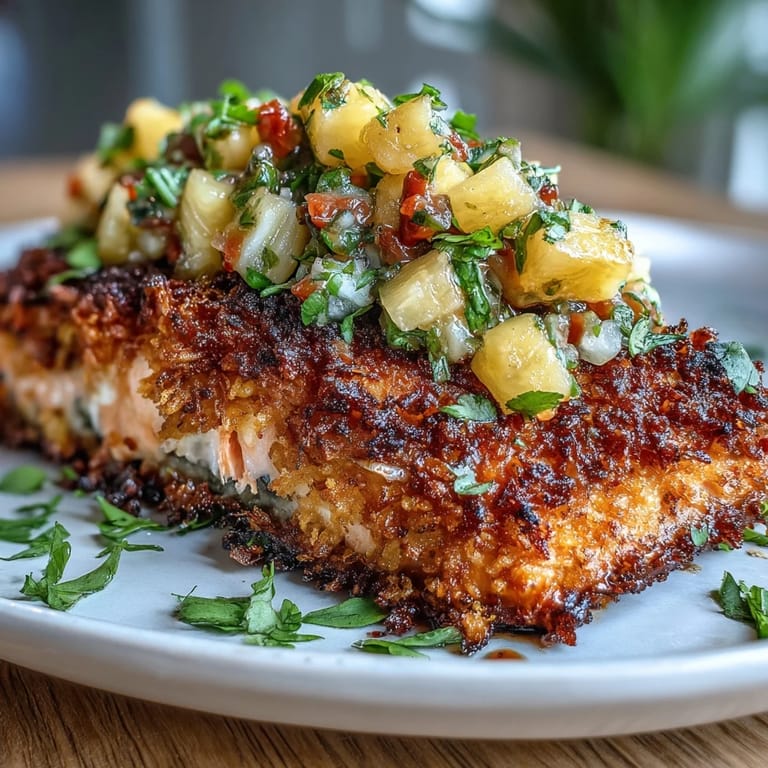
- Preheat your oven to 375°F and heat that olive oil in a large oven-safe skillet over medium-high heat. When the oil starts to shimmer and move like liquid mercury, place the coated salmon fillets in the pan. Let them sear undisturbed for 3 to 4 minutes until the coconut turns golden brown and smells like toasted paradise.
- Flip and finish in the oven:
- Carefully flip each fillet and sear the second side for 2 to 3 minutes. Transfer the entire skillet to the oven and bake for 8 to 10 minutes. The salmon is done when it reaches 145°F internally and flakes easily with a fork.
- Rest and serve:
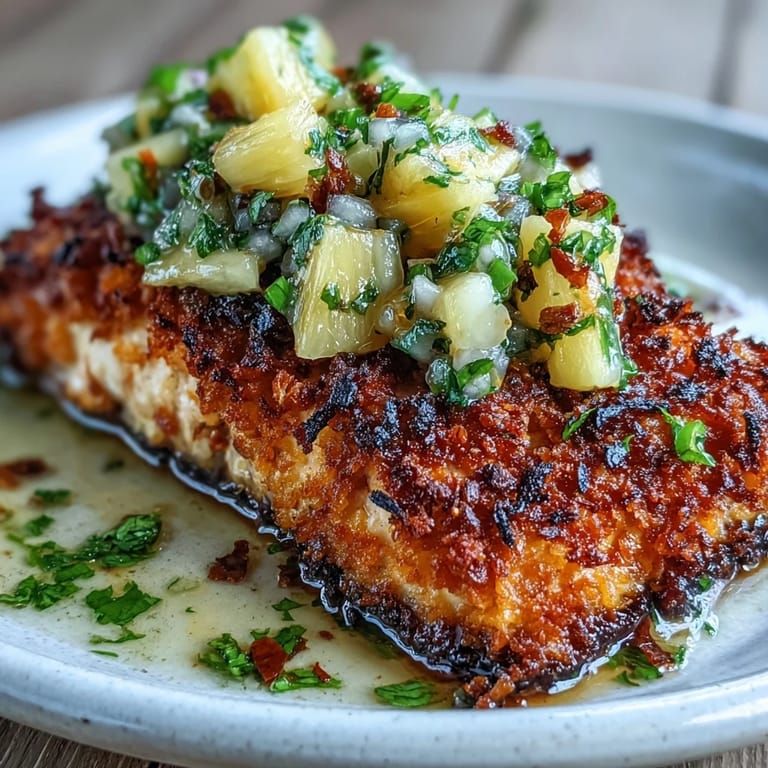
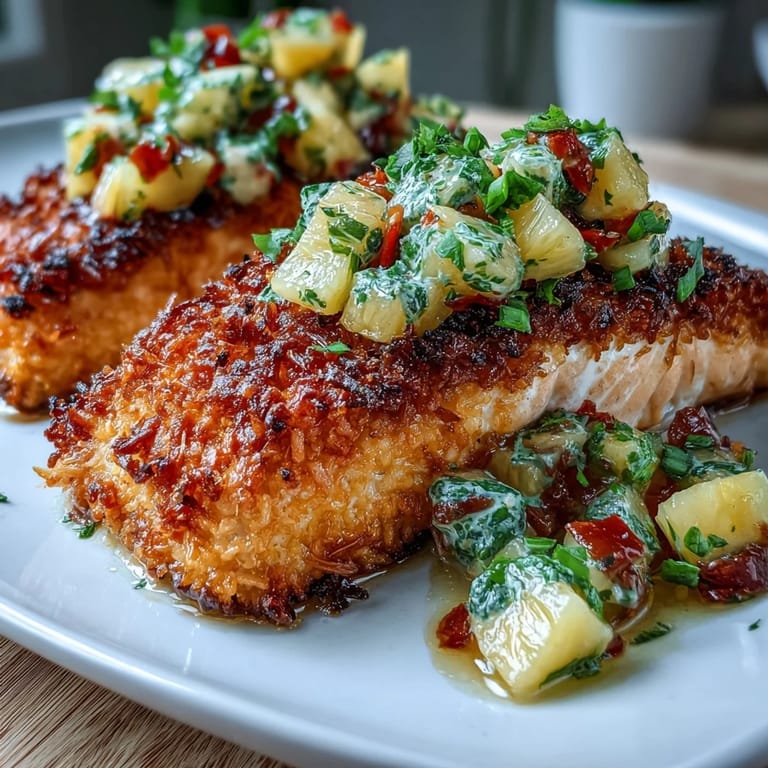
- Let the salmon rest for 5 minutes out of the oven, which helps the juices redistribute instead of running all over your plate. Top each fillet with a generous spoonful of pineapple salsa and serve with lime wedges on the side.
 Save to Pinterest
 My dad who is suspicious of anything he describes as too fancy actually asked for the recipe after trying this. He said the combination reminded him of a fishing trip to Florida where he ate at this little shack right on the water, and that is pretty much the highest compliment he can give to any fish dish.
Making It Gluten Free
Swap the regular panko for gluten-free panko or crushed rice crackers. I have used both with excellent results, and honestly, the rice cracker version might have an even lighter crunch that some people prefer.
Perfecting The Crust
Press the coconut mixture onto the salmon firmly but gently, almost like you are burying a treasure at the beach. Any loose coconut will fall off during cooking, so take the extra minute to really press it in and ensure an even coating on all sides.
Serving Suggestions That Work
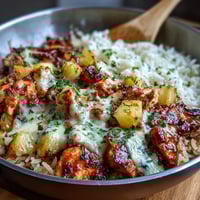
Coconut rice is the obvious pairing here and it does work beautifully, but I have also served this over simple quinoa or even roasted sweet potatoes when I want something more substantial. The sweetness of the potatoes plays really well with the tropical flavors.
- A crisp white wine like Sauvignon Blanc cuts through the richness nicely
- Simple steamed broccoli or green beans balance the heavy elements
- Fresh mango slices on the side make the tropical theme even more pronounced
 Save to Pinterest
 This is one of those recipes that looks impressive enough for guests but comes together quickly enough for a random Tuesday when you need to escape to somewhere warmer, if only in your mind.
FAQs About This Recipe
- → What makes the crust crispy?
The combination of shredded coconut and panko breadcrumbs creates a dual-texture crust. Coconut provides natural crispiness while panko adds extra crunch that holds up during searing and baking.
- → Can I make this gluten-free?
Yes. Substitute regular panko with gluten-free panko or crushed rice crackers. The coating method remains identical, and results will be just as crispy.
- → How do I know when salmon is done?
Use an instant-read thermometer. Salmon is perfectly cooked at 145°F internal temperature. The flesh should be opaque and flake easily with a fork.
- → Can I prepare the salsa ahead?
Absolutely. The pineapple salsa actually benefits from sitting 30 minutes to 2 hours before serving. This allows flavors to meld together intensifying the sweet and tangy notes.
- → What sides pair well?
Coconut rice complements the tropical theme beautifully. Fresh green salads, roasted asparagus, or grilled vegetables also work wonderfully to balance the rich salmon.
- → Can I use frozen salmon?
Yes. Thaw frozen salmon in the refrigerator overnight. Pat thoroughly dry before coating to ensure the crust adheres properly during cooking.