 Save to Pinterest
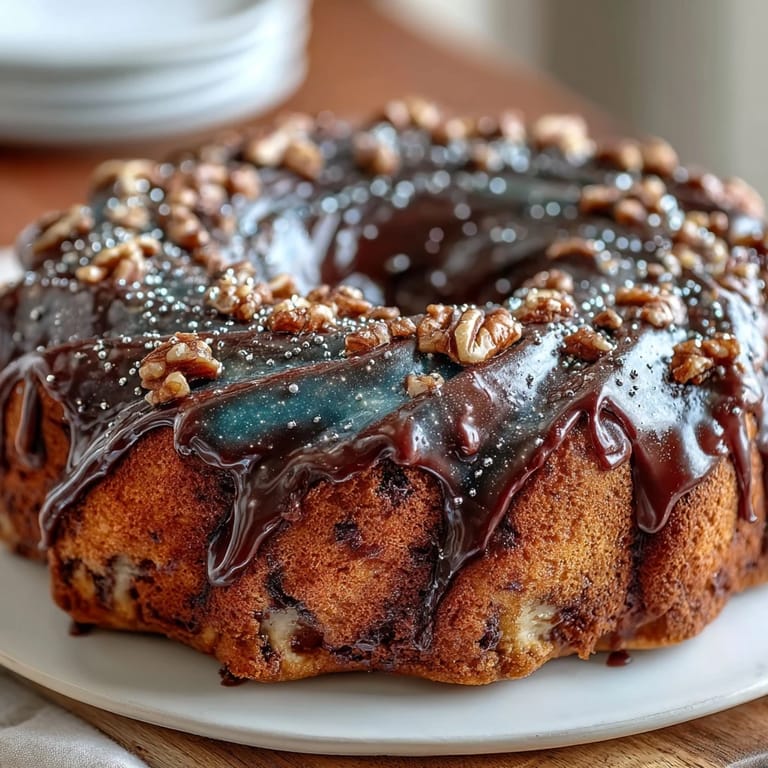
 My sister called me three weeks before her graduation with a request that made me laugh: she wanted a cake that looked like the night sky, something cosmic and celebratory that would make her friends say wow. I'd never attempted galaxy buttercream before, but standing in my kitchen at midnight, piping swirls of purple and navy onto vanilla layers, I realized this wasn't just about frosting—it was about capturing that feeling of endless possibility that graduation represents. The edible stars caught the kitchen light like tiny promises, and suddenly the whole project felt less intimidating and more like magic.
When I pulled this cake out of the refrigerator for my sister's party, watching her face light up made every minute of preparation worth it. Her friends gathered around immediately, phones out, and someone actually gasped—a genuine, delighted gasp that only happens with truly show-stopping desserts. That's when I understood: this cake wasn't just beautiful, it was a moment.
Ingredients
- All-purpose flour (2 ½ cups): This is your cake's foundation, so measure by spooning and leveling rather than scooping straight from the bag—it makes a surprising difference in texture.
- Granulated sugar (2 cups): Creaming it thoroughly with butter creates the lift you need for tender, fluffy layers.
- Unsalted butter (1 cup + 1 ½ cups for buttercream): Room temperature is non-negotiable here; cold butter won't cream properly and you'll miss that cloud-like texture.
- Whole milk (1 cup for cake, ¼ cup for buttercream): Room temperature milk blends seamlessly into the batter without shocking the mixture.
- Large eggs (4), room temperature: Cold eggs won't incorporate evenly and can make your batter curdle slightly.
- Baking powder (2 ½ tsp): Check that it's fresh by adding a pinch to water—it should fizz enthusiastically.
- Gel food coloring in black, navy blue, purple, pink, and teal: Gel coloring gives you those rich, saturated galaxy colors without thinning out your buttercream like liquid coloring would.
- Edible gold and silver star sprinkles: These are your celebration confetti, so choose quality brands that taste pleasant and shine genuinely.
- Edible glitter or luster dust: A light hand transforms ordinary frosting into something that catches light like actual stars.
Tired of Takeout? 🥡
Get 10 meals you can make faster than delivery arrives. Seriously.
One email. No spam. Unsubscribe anytime.
Instructions
- Set yourself up for success:
- Preheat your oven to 350°F and prepare three 8-inch round pans with parchment circles and butter—this prevents sticking and makes removal graceful. Gather all ingredients at room temperature, especially butter, eggs, and milk, because temperature consistency is what separates dense cake from cloud.
- Build your batter base:
- Cream the softened butter and sugar together for a full 3 to 4 minutes until it's pale and fluffy, like pale sand. Add eggs one at a time, beating well after each addition so everything emulsifies properly, then stir in vanilla extract with intention.
- Combine dry and wet gently:
- Whisk your flour, baking powder, and salt in a separate bowl, then alternate adding the dry mixture and milk to your butter mixture in three additions, starting and ending with flour. This technique prevents overmixing, which would develop gluten and make your cake tough instead of tender.
- Bake with patience:
- Divide batter evenly among pans and bake for 30 to 35 minutes until a toothpick comes out clean and the tops spring back when touched. Let cakes cool in pans for 10 minutes—this prevents them from collapsing—then turn out onto wire racks until completely cool.
- Create your galaxy buttercream:
- Beat softened butter until creamy, gradually add sifted powdered sugar, then milk and vanilla, beating until fluffy and spreadable. Divide into four or five bowls and tint each with gel coloring, using less than you think you need because the colors deepen as you mix.
- Build your color log:
- Spoon random dollops of each colored buttercream onto plastic wrap, then roll it up and twist the ends to create a striped log. Snip one end and fit it into a piping bag with a large round tip for easy marbling.
- Stack and coat:
- Place your first cake layer on a serving plate, spread a thin layer of galaxy buttercream, repeat with remaining layers, then apply a crumb coat all over and chill for 20 minutes. This seals in crumbs so your final frosting layer stays pristine.
- Pipe your galaxy:
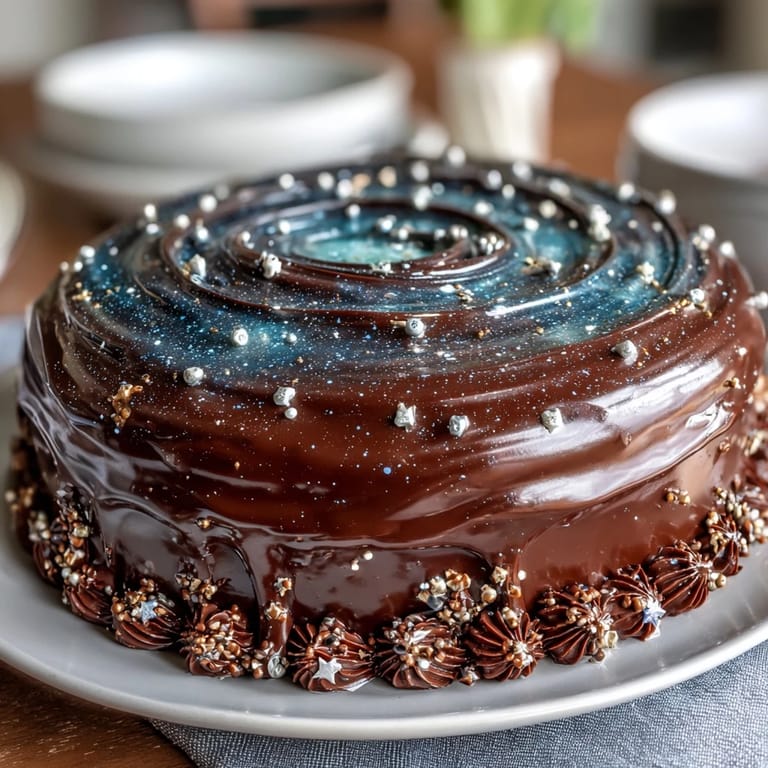
- Pipe swirls and dabs of the rainbow buttercream log across the cake, then gently swirl with an offset spatula to create that marbled, nebula effect. Work slowly and let the colors blend naturally—it's harder to undo aggressive swirling.
- Add the stars:
- Mix white gel coloring with a tiny bit of water to create a splatterable consistency, then use a food-safe paintbrush or splatter tool to flick stars across the entire cake surface. Layer edible gold and silver star sprinkles and finish with a dusting of edible glitter for that shimmer.
 Save to Pinterest
 Two days after the party, my sister texted me a photo of the leftover cake in her refrigerator with the caption, no one wanted to cut into it. Sometimes food transcends hunger and becomes memory instead, and this cake did exactly that.
Flavor Variations to Consider
While the classic vanilla cake is stunning on its own, introducing subtle flavor layers deepens the whole experience. I've experimented with adding a thin stripe of raspberry or blueberry jam between layers, which adds tartness that cuts through the sweetness and creates a pleasant surprise with each bite. You could also infuse the cake with a hint of almond extract or even lemon zest if you want the cake itself to whisper elegantly rather than just be a vehicle for buttercream.
The Science Behind the Color
Gel food coloring makes all the difference between a muddy brownish-purple and a true galaxy violet, and the reason is chemical: gel coloring has less water content than liquid coloring, so it doesn't dilute your buttercream or throw off the consistency. When I first made this cake using liquid coloring, the buttercream became thin and slippery, and my swirls slid across the cake like I was finger-painting on ice. Investing in gel coloring felt expensive until I realized one small bottle lasts through dozens of cakes.
Timing and Temperature Secrets
The temperature of your ingredients sounds like a detail that shouldn't matter, but it changes everything about how your batter emulsifies and how your cake rises. Room temperature butter cream more easily with sugar, room temperature eggs blend without curdling the mixture, and room temperature milk incorporates smoothly instead of shocking the batter into density. I learned this the hard way by rushing and grabbing ingredients straight from the refrigerator, resulting in a dense, oddly-textured cake that looked beautiful but tasted heavy.
- Set ingredients out 30 minutes before baking and your cake will have noticeably better crumb and rise.
- If you forget, sit eggs in warm water for 5 minutes and place butter near a warm oven to speed the process.
- A digital thermometer isn't overkill if you're serious about consistent results across batches.
 Save to Pinterest
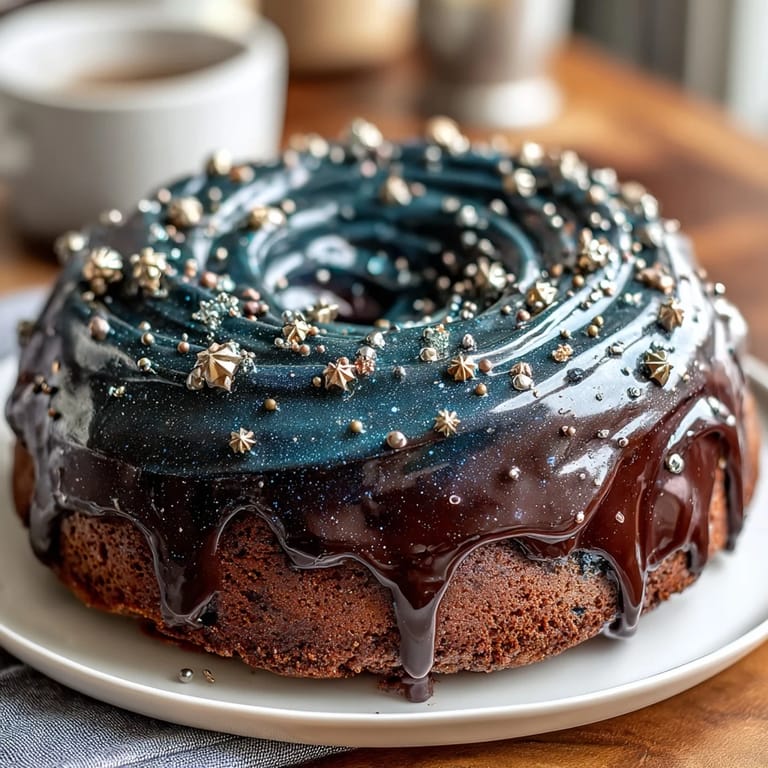
 Making this cake taught me that celebrations deserve more than just delicious food—they deserve a story, something visual that makes people pause and say this is special. Whether you're celebrating a graduation, a promotion, or simply a friend's kindness, this galaxy cake carries that weight beautifully.
FAQs About This Recipe
- → How do I create the galaxy effect on the buttercream?
Divide the buttercream into multiple bowls and tint each with different colors like black, navy, purple, pink, and teal. Place spoonfuls of each color together and roll to create a marbled log, then pipe onto the cake for a swirling galaxy look.
- → What type of food coloring is best for vibrant colors?
Gel food coloring delivers the brightest, most vivid hues without thinning the buttercream consistency, making it ideal for this design.
- → Can I prepare the cake layers ahead of time?
Yes, bake the layers in advance and store them wrapped tightly in the refrigerator. Bring them to room temperature before assembling and frosting.
- → How are the edible stars applied to the cake?
Use a food-safe paintbrush or splatter tool dipped in white gel coloring to flick star shapes across the frosted surface, then add gold and silver star sprinkles for extra sparkle.
- → What are some optional flavor enhancements?
Adding a layer of raspberry or blueberry jam between the cake layers adds a fruity contrast that complements the buttery sweetness.