 Save to Pinterest
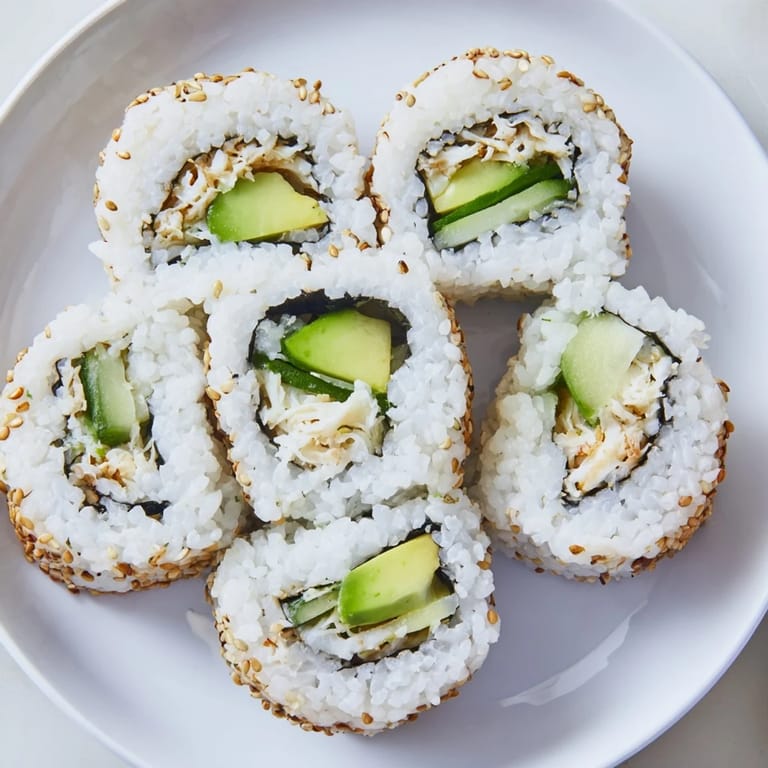
 I discovered California rolls on a random Tuesday night when my friend insisted on ordering sushi instead of our usual pizza. I was skeptical about the avocado and crab combination, but one bite changed everything—suddenly I understood why this Japanese-American hybrid had conquered American dinner tables. The next weekend, I bought a bamboo mat and determined to recreate that exact roll in my own kitchen, and what started as curiosity became an obsession I never expected.
I still remember the first time I served these to my family—my mom actually paused mid-bite and asked if I'd bought them from somewhere, which felt like the highest compliment possible. My dad, who claims he doesn't like raw fish, ate four pieces and didn't even realize the cucumber wasn't cooked. That moment taught me that good food isn't about fancy techniques; it's about flavors working together so perfectly that people forget to overthink it.
Ingredients
- Sushi Rice (1 ½ cups): This is the foundation—use actual sushi rice, not regular white rice, because the starch content and grain shape matter more than you'd think. Rinsing it thoroughly removes excess starch and prevents the rolls from turning mushy.
- Rice Vinegar (2 ½ tbsp): This adds the signature tangy sweetness that makes sushi rice taste alive rather than plain. Don't skip it or substitute with regular vinegar.
- Sugar and Salt: These balance the vinegar's punch and bring out the rice's natural flavor.
- Crabmeat or Surimi (120 g): Imitation crab works beautifully here and is honestly more forgiving than real crab for beginners. Shred it into thin strands so it distributes evenly.
- Avocado: Choose one that yields slightly to pressure but isn't soft or bruised. Slice it just before rolling to prevent browning.
- Cucumber (½): Peel and seed it to remove excess moisture, which prevents soggy rolls and ensures they hold their shape.
- Nori (4 sheets): Buy quality nori—the difference between flimsy and sturdy seaweed is noticeable the moment you start rolling.
- Toasted Sesame Seeds (2 tbsp): Toast them yourself if you can, or buy pre-toasted ones. They add nuttiness and visual appeal.
- Mayonnaise (optional): A thin line adds creaminess, but don't overdo it or your rolls will be slippery and hard to slice cleanly.
Tired of Takeout? 🥡
Get 10 meals you can make faster than delivery arrives. Seriously.
One email. No spam. Unsubscribe anytime.
Instructions
- Prepare the Rice Foundation:
- Rinse your sushi rice under cold running water, stirring gently until the water turns from cloudy white to clear—this takes patience but removes the starch that would make your rolls gluey. Combine with fresh water and cook, covered, for 15 minutes on low heat, then let it steam undisturbed for 10 more minutes while you move on to the next step.
- Season While Still Warm:
- Mix the rice vinegar, sugar, and salt in a small bowl until everything dissolves completely. Pour this mixture over your still-warm rice and fold it in gently with a wooden spoon, cutting through the rice rather than stirring, so you don't crush the grains. Let it cool to room temperature—this is important because warm rice will wilt your nori and make rolling impossible.
- Set Up Your Rolling Station:
- Lay your bamboo mat on a clean surface, cover it with plastic wrap so the rice doesn't stick to the bamboo, and place one sheet of nori shiny side down on top. Fill a small bowl with water and keep it within arm's reach—you'll need it to seal your rolls.
- Layer the Rice:
- Wet your hands with water so the rice doesn't stick to your fingers, then take about ¾ cup of rice and spread it evenly over the nori, leaving about 2 cm of empty space at the top. This gap is crucial—it's what allows you to seal the roll closed. Sprinkle sesame seeds over the rice layer, pressing them gently so they stick.
- Make the Bold Flip:
- Now comes the move that feels daring but works every time: flip the nori and rice so the rice side faces down on the mat and the nori faces up. This technique, called uramaki, keeps the rice on the outside and looks restaurant-perfect.
- Fill with Purpose:
- Arrange your crab, avocado, and cucumber in a thin line along the bottom third of the nori, staying slightly off-center toward the edge closest to you. Add a thin line of mayo if you're using it, but resist the urge to overstuff—the secret to clean slices is restraint.
- Roll with Confidence:
- Using the mat to guide you, roll the nori tightly toward you, pressing gently as you go so everything stays snug. When you reach the top edge, dip your finger in water and run it along the exposed nori, then continue rolling to seal the seam.
- Slice Like a Professional:
- Dip a sharp knife in water between each cut, wiping it clean each time you finish a slice. This prevents the rice and nori from sticking to the blade and gives you clean, attractive pieces instead of smashed ones.
- Serve Immediately:
- Arrange your rolls on a plate, set out small bowls of soy sauce, pickled ginger, and wasabi, and watch people's faces light up when they realize you made this yourself.
 Save to Pinterest
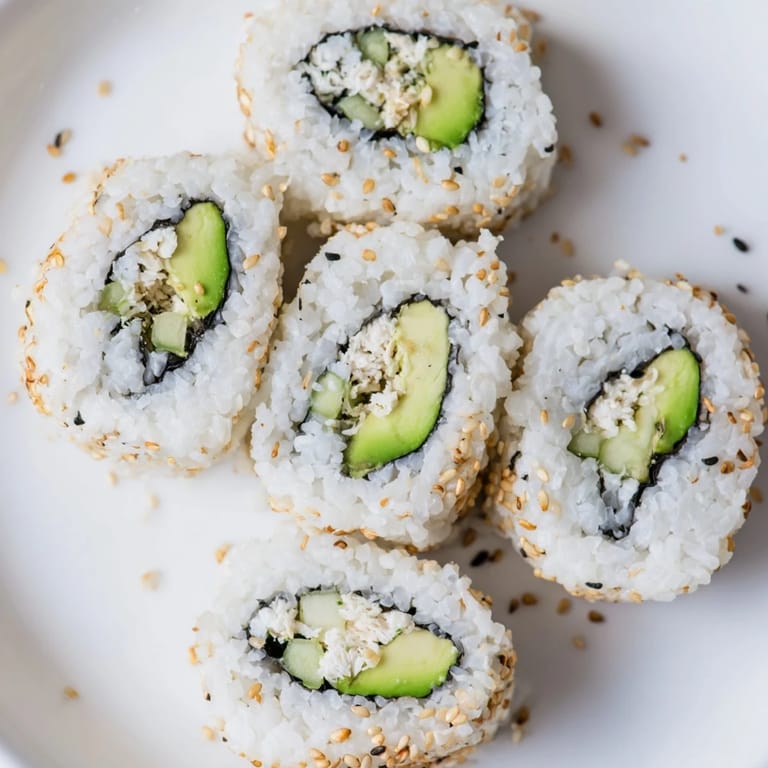
 There's something almost meditative about rolling sushi at home—the repetitive motion, the quiet satisfaction of watching each roll take shape, the moment you slice it and see those perfect rings inside. I've made these rolls countless times now, and they've become my go-to dish when I want to feel accomplished without spending hours cooking.
Why This Roll Conquered America
The California roll is genius because it bridges two cuisines perfectly. It respects Japanese technique and tradition while welcoming American palates with ingredients like mayonnaise, crab, and creamy avocado. When this roll first appeared in North America in the 1960s, it helped people fall in love with sushi and opened doors to exploring other types of rolls and Japanese food. What makes it endure is that it's neither pretentious nor boring—it's just really, really good.
Variations to Explore Once You've Mastered the Classic
Once you nail the traditional California roll, you have permission to play. Try adding thin slices of jalapeño for heat, sriracha-spiked mayo for a kick, or even a sprinkle of spicy mayo on top for extra richness. Some people add a touch of fresh wasabi directly to the filling, while others layer in thin slices of mango for sweetness. The beauty of understanding the technique is that you can swap vegetables, proteins, and flavor profiles around once the rolling itself becomes second nature.
Serving and Storage Wisdom
California rolls taste best fresh, ideally within a few hours of rolling, when the nori still has a slight crunch and the rice is still perfectly seasoned. If you're making these ahead, store them wrapped in plastic wrap in the refrigerator for up to 4 hours, though the nori will gradually soften. Serve them alongside small dishes of soy sauce for dipping, pickled ginger to cleanse your palate between rolls, and wasabi for those who like heat.
- Use a serrated knife or a very sharp damp knife to prevent crushing the rolls during slicing.
- If your nori breaks during rolling, just patch it with a small piece of extra nori and keep going—nobody will notice.
- Room-temperature rolls are actually more flavorful than cold ones, so consider letting them sit out for 10 minutes before serving.
 Save to Pinterest
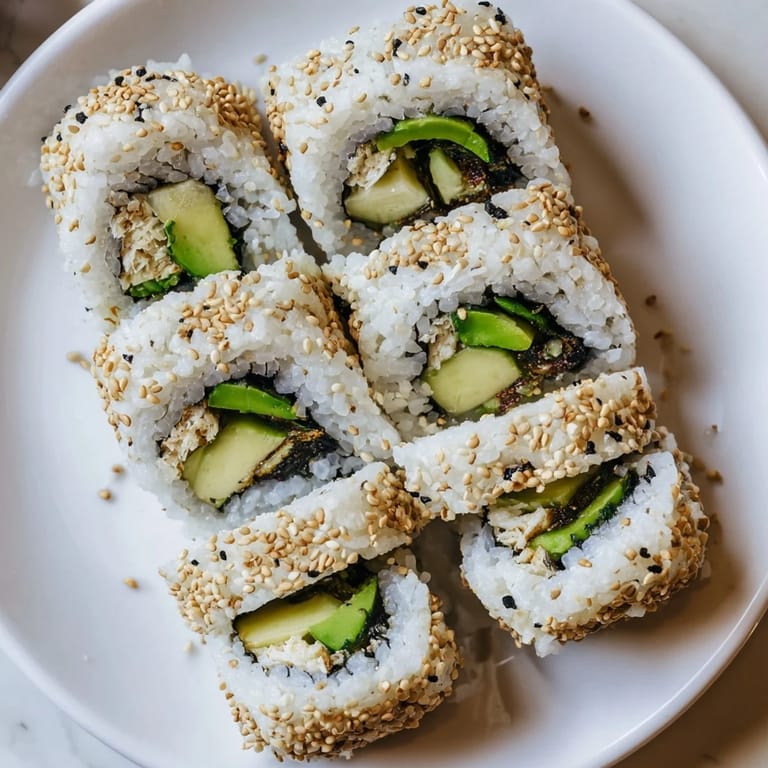
 Making California rolls at home transforms something that feels special and restaurant-exclusive into something you can create any night of the week. Your friends and family will be impressed, and you'll feel the pride of knowing you made something delicious from scratch.
FAQs About This Recipe
- → What type of crab is best for this roll?
Cooked crabmeat or imitation crab (surimi) are commonly used, providing a delicate seafood flavor that pairs well with avocado and cucumber.
- → How should sushi rice be prepared for this roll?
Rinse the rice until water runs clear, cook it with water, then season with a mixture of rice vinegar, sugar, and salt, allowing it to cool before assembly.
- → Can I make a vegetarian version?
Yes, substitute crab with extra avocado and cucumber or soft tofu to maintain texture and flavor balance.
- → What tools do I need to roll this properly?
A bamboo sushi rolling mat, sharp knife, and plastic wrap are essential for shaping and slicing the roll neatly.
- → How can I add a spicy twist?
Add a touch of sriracha to mayonnaise before spreading it inside the roll for a gentle heat boost.