 Save to Pinterest
 The first time I made General Tso's chicken at home, I was determined to skip the takeout order and prove I could nail those crispy, caramelized pieces myself. My kitchen filled with the smell of sesame oil and garlic hitting hot wok, and suddenly the whole dish made sense—it wasn't just about the sauce, it was about timing and temperature and that perfect moment when everything comes together. I've made it dozens of times since, but that first batch taught me everything I needed to know about why this dish has such a hold on people.
I remember cooking this for my roommate on a random Tuesday when she'd had a terrible day at work. She walked in as I was finishing the sauce, and the look on her face when she tasted that first bite—the way her shoulders literally relaxed—reminded me that food can do more than fill your stomach. She asked for the recipe that night, and now it's her go-to when she needs comfort on a plate.
Ingredients
- Chicken thighs (600g, cut into 1-inch pieces): Thighs stay juicier than breast meat during frying, and they absorb the sauce better without drying out in the wok.
- Eggs (2 large): The binder that helps cornstarch and flour stick properly, creating that crucial crispy coating.
- Cornstarch and all-purpose flour (1 cup and ½ cup): The cornstarch is your secret weapon for extra crispiness; the flour adds structure so nothing falls apart.
- Soy sauce (varied amounts): This umami foundation appears in the marinade and sauce, so don't skimp on quality here.
- Rice vinegar (2 tbsp): The acid that cuts through richness and balances the sweetness—essential for the sauce's personality.
- Hoisin sauce (2 tbsp): Adds depth and a subtle fermented quality that makes people ask what your secret ingredient is.
- Dried red chilies (6-8): Toast these before adding to bloom their flavors; they're milder than you'd expect, more fragrant than fire.
- Sesame oil (combined 3 tsp): Use it sparingly in both marinade and sauce for that distinctive nutty finish.
- Garlic and ginger (3 cloves and 2 tsp): Mince the garlic fine and grate the ginger so they distribute evenly and don't overpower.
- Chicken broth (½ cup): Creates the base for your sauce; homemade tastes noticeably better if you have it on hand.
- Cornstarch slurry (1 tbsp cornstarch and 1 tbsp water): This mixture, stirred in just before the sauce thickens, transforms liquid into glossy coating.
Tired of Takeout? 🥡
Get 10 meals you can make faster than delivery arrives. Seriously.
One email. No spam. Unsubscribe anytime.
Instructions
- Marinate and prep your chicken:
- Whisk eggs with soy sauce, sesame oil, and white pepper, then coat the chicken pieces thoroughly. Let them sit for just a few minutes—this isn't a long marinade, just enough for flavor to start clinging to the meat. The coating will feel slippery, which is exactly what you want.
- Create your crispy armor:
- Mix cornstarch and flour in a shallow bowl and dredge each piece, making sure to shake off excess so you get crispiness, not a thick crust. Work in batches so you're not crowding the coating mixture.
- Fry until golden and listen for the sizzle:
- Heat oil to 350°F (180°C)—use a thermometer, don't guess—and fry chicken in batches for 4-5 minutes until deeply golden. The chicken should sound crispy when you move it with your tongs, and it should drain on a rack so the underside stays crunchy.
- Build your sauce foundation:
- Combine broth, soy sauce, rice vinegar, hoisin, sugar, sesame oil, and Shaoxing wine in a bowl. Make your cornstarch slurry separately so it dissolves smoothly without lumps, then stir it in—this step is what prevents a thin, watery sauce.
- Toast and infuse with aromatics:
- Heat oil in your wok over medium heat and add dried chilies, garlic, and ginger for about a minute until your kitchen smells intoxicating. This blooming step multiplies their impact—rushing it means flat flavor.
- Cook the sauce to glossy perfection:
- Pour in your prepared sauce and stir constantly for 2-3 minutes until it thickens and coats a spoon. You'll see it go from thin to silky, which means the starch has done its job.
- Bring it all together:
- Toss the fried chicken into the sauce immediately so every piece gets coated while the sauce is still hot and glossy. Work quickly and serve right away before anything loses its crispiness.
 Save to Pinterest
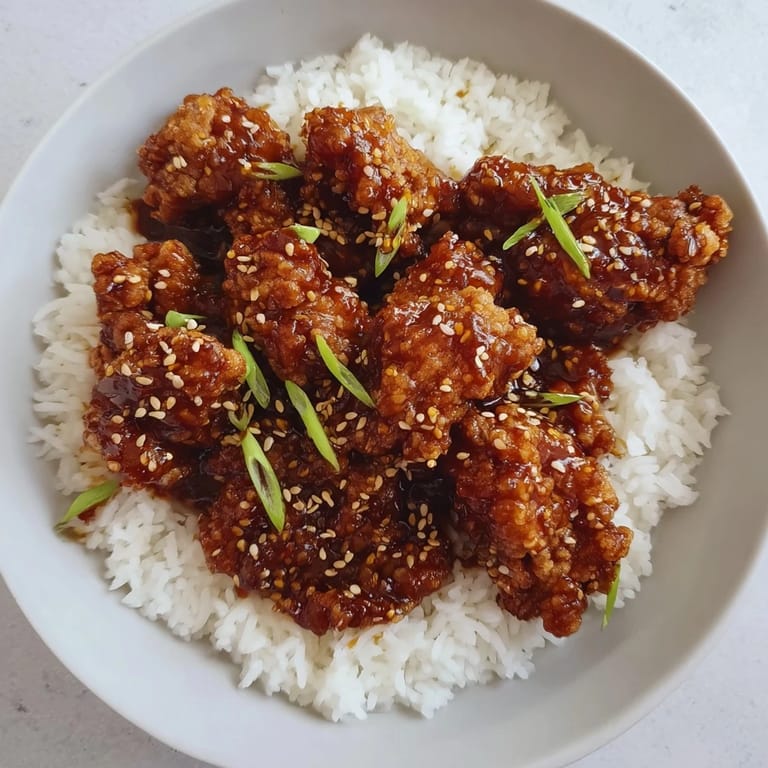
 The magic of this dish is watching someone's face light up when they realize homemade tastes this good—when they bite into chicken that's simultaneously crispy and tender, coated in a sauce that's perfectly balanced between sweet, tangy, and just hot enough. It's the kind of food that makes people linger at the table a little longer.
Why Oil Temperature Matters More Than You Think
I learned this lesson the hard way on my second attempt when I thought I could eyeball it—my chicken turned out greasy and pale instead of golden and crisp. Getting that oil to exactly 350°F creates a Maillard reaction that gives you color and flavor while sealing the coating before the inside gets a chance to absorb excess oil. A cooking thermometer is a five-dollar investment that pays for itself in better results, every single time.
The Sauce Is Everything
You could fry chicken any number of ways, but what makes General Tso's special is that balance of sweet, sour, salty, and spicy that hits your palate all at once. The hoisin brings a subtle fermented depth that separates this from basic sweet and sour, and the rice vinegar keeps it from tasting like dessert. I've watched people take one bite and immediately ask if I'm using a special ingredient—spoiler alert, it's just good proportions and not skipping the cornstarch slurry.
Adapting Heat Levels and Variations
The beauty of making this at home is that you control exactly how spicy it gets, which means everyone at your table can enjoy it their way. If you're heat-sensitive, removing the seeds from dried chilies cuts the fire dramatically while keeping flavor, and if you love heat, add extra chili flakes at the end. Some nights I use fresh Thai bird's eye chilies for a different kind of spice, other times I leave them whole so they're more decorative than fiery.
- For a lighter version, toss chicken with cornstarch, spray with oil, and air-fry at 400°F for 12-15 minutes until crispy and golden.
- Substitute chicken breast if thighs aren't available, but watch the cooking time carefully since breast meat dries out faster.
- A splash of Shaoxing wine is optional but adds complexity—if you skip it, use a tiny splash of rice wine or sherry instead.
 Save to Pinterest
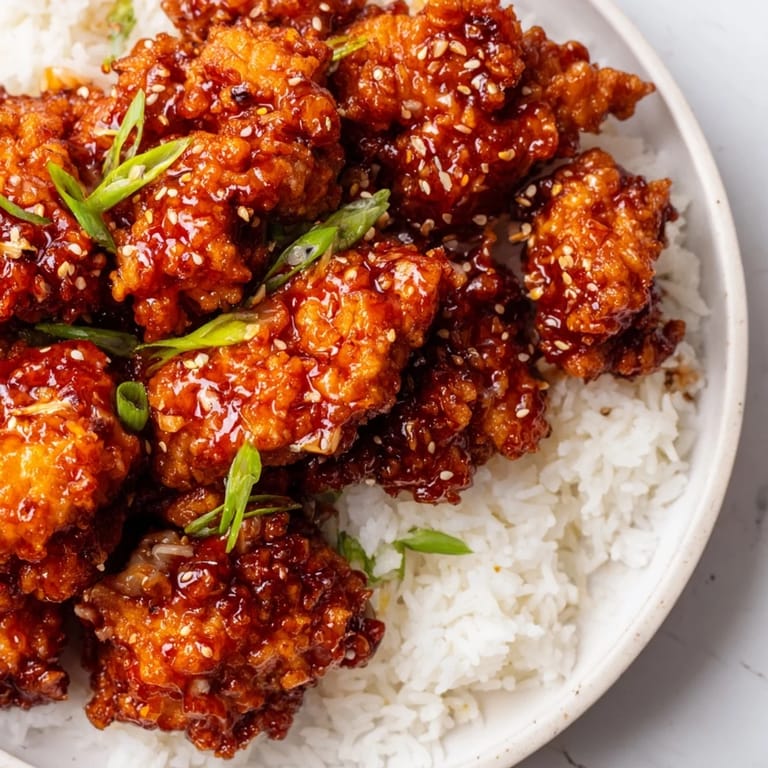
 This is the kind of dish that tastes like restaurant quality but feels like home—crispy, saucy, and completely under your control. Once you nail it, you'll never look at takeout menus the same way again.
FAQs About This Recipe
- → What cut of chicken works best for this dish?
Boneless, skinless chicken thighs are preferred for their juiciness and tenderness, but chicken breast can be used for a leaner option.
- → Can I adjust the spiciness level?
Yes, modify the number of dried red chilies or chili flakes to suit your preferred heat intensity.
- → Is deep-frying the only cooking method for the chicken?
While deep-frying ensures maximum crispiness, baking or air-frying can be used as lighter alternatives.
- → What ingredients create the sauce’s glossy texture?
Cornstarch mixed with water forms a slurry that thickens the sauce into a shiny, smooth consistency.
- → What garnishes enhance the final presentation?
Spring onions and toasted sesame seeds add fresh flavor and a subtle crunch to the finished dish.