 Save to Pinterest
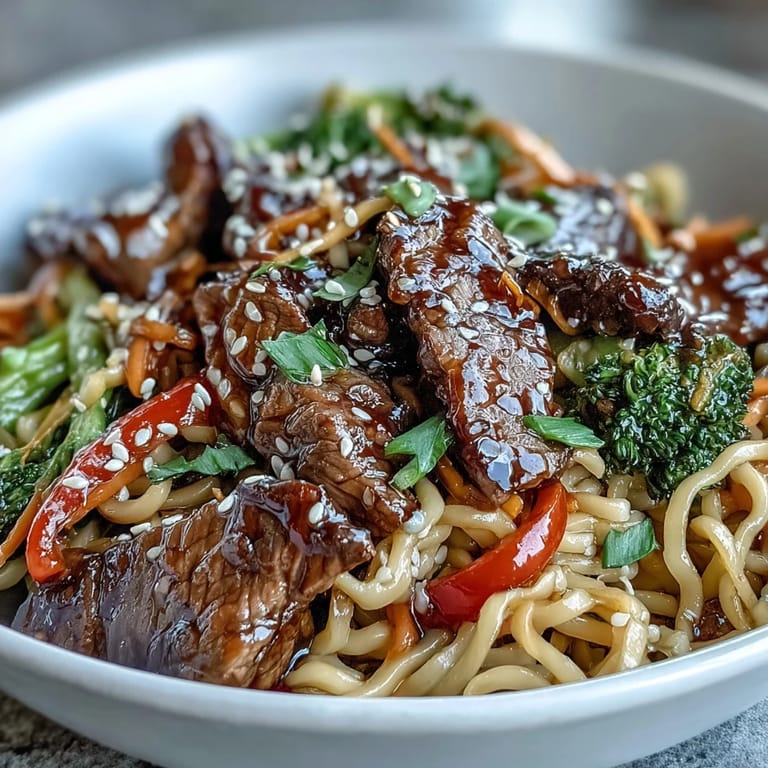
 The smell of garlic hitting hot oil always brings me straight back to that tiny kitchen where I first tried to stir-fry beef without turning it into leather. I learned quickly that high heat and constant motion are your best friends when you want tender, caramelized edges. These noodles came together on a night when I was craving something rich and savory but didn't want to spend an hour at the stove. The glossy sauce clings to every strand, and the vegetables stay just crisp enough to snap between your teeth. It's become my go-to when I need comfort in a bowl without the fuss.
I made this for a group of friends who claimed they didn't like rice noodles, and they scraped the pan clean. One of them kept asking what secret ingredient made the beef so tender, and I had to admit it was just patience and a sharp knife. We sat around the table with our bowls, passing the sesame seeds and green onions like condiments at a diner. Someone added a squirt of sriracha and declared it life-changing. That night, this dish stopped being just dinner and became the meal I make when I want people to feel welcome.
Ingredients
- Rice noodles: These slippery strands soak up sauce like a dream, and they cook faster than you think, so watch them closely or they'll turn to mush.
- Flank steak: Slicing against the grain is the difference between tender bites and chewy regret, and freezing the meat for 15 minutes makes slicing way easier.
- Broccoli florets: They add a slight bitterness that balances the sweet sauce, and I like cutting them small so they cook evenly with the other vegetables.
- Bell pepper: Red or yellow peppers bring a pop of color and a hint of sweetness that complements the savory beef beautifully.
- Carrot: Julienned into matchsticks, they add crunch and a touch of earthiness that rounds out the bowl.
- Green onions: Chopped fresh at the end, they give a sharp, grassy bite that wakes up every forkful.
- Garlic and ginger: This duo is non-negotiable, the fragrance that fills your kitchen is half the reason to make this dish.
- Soy sauce: The salty backbone of the sauce, and I always keep a bottle of low-sodium on hand so I can control the salt level.
- Brown sugar: It melts into the sauce and caramelizes slightly on the beef, creating those dark, glossy edges everyone fights over.
- Sesame oil: Just a tablespoon perfumes the whole skillet with a nutty richness that ties everything together.
- Vegetable oil: High smoke point oil is essential for stir-frying without setting off the smoke alarm.
- Sesame seeds: Toasted or raw, they add a delicate crunch and make the dish look like it came from a restaurant.
Tired of Takeout? 🥡
Get 10 meals you can make faster than delivery arrives. Seriously.
One email. No spam. Unsubscribe anytime.
Instructions
- Cook the noodles:
- Boil the rice noodles according to the package directions, then drain and rinse them under cold water to stop the cooking. This keeps them from sticking together in a gummy clump while you prep everything else.
- Heat the skillet:
- Pour vegetable oil into a large skillet or wok and crank the heat to medium-high until the oil shimmers. You want it hot enough that the beef sizzles the moment it hits the pan.
- Sear the beef:
- Add the thinly sliced flank steak in a single layer and let it sit for a minute before stirring, so it gets a nice brown crust. Cook for 2 to 3 minutes total, then pull it out and set it aside so it doesn't overcook.
- Bloom the aromatics:
- Toss the minced garlic and grated ginger into the same skillet and stir constantly for about 30 seconds. The smell will hit you fast, and that's when you know they're ready.
- Stir-fry the vegetables:
- Add the broccoli, bell pepper, and carrot, then stir-fry for about 5 minutes, keeping everything moving so it cooks evenly. You want the vegetables tender but still crisp, with a little char on the edges.
- Mix the sauce:
- In a small bowl, whisk together the soy sauce, brown sugar, and sesame oil until the sugar dissolves completely. Taste it now if you want to adjust the sweetness or saltiness before it goes in the pan.
- Combine beef and sauce:
- Return the beef to the skillet and pour the sauce over everything, stirring quickly to coat. The sauce will bubble and thicken slightly as it heats, clinging to the beef and vegetables.
- Toss in the noodles:
- Add the cooked rice noodles and gently toss everything together with tongs or a spatula, making sure every strand gets coated in that glossy sauce. Heat through for about 2 minutes, and you're done.
- Garnish and serve:
- Sprinkle chopped green onions and sesame seeds over the top right before serving. The green onions add a fresh bite, and the sesame seeds give a little crunch that makes each bowl feel complete.
 Save to Pinterest
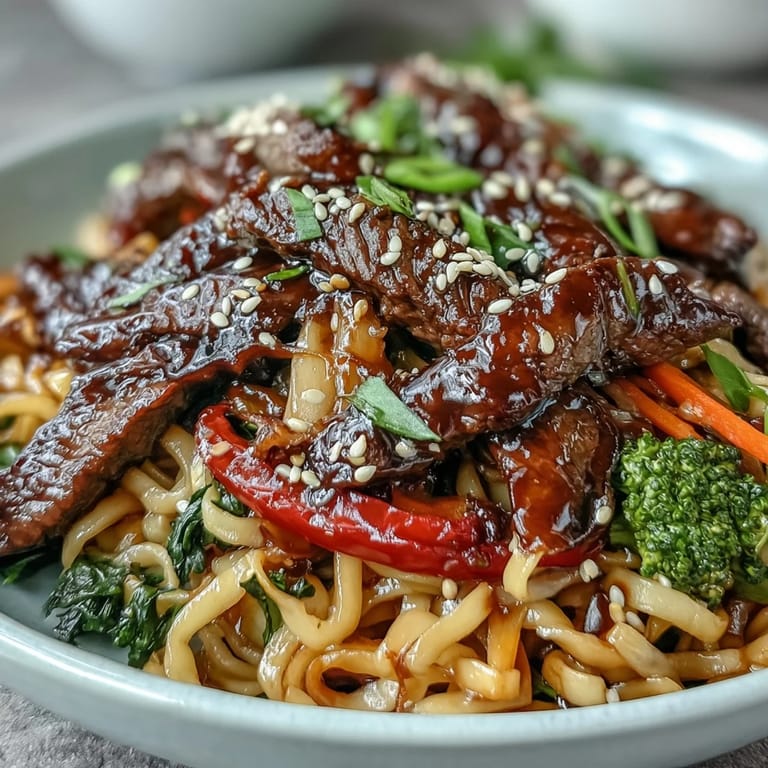
 There was a rainy evening when I made this for myself after a long day, and I ended up sitting on the floor with the bowl in my lap, twirling noodles and feeling the warmth seep into my bones. The sauce had pooled at the bottom, and I tilted the bowl to catch every last drop with my chopsticks. It wasn't fancy or Instagram-worthy, but it was exactly what I needed. That's when I realized this dish isn't just about feeding people, it's about the quiet comfort of a meal that knows you.
Swapping and Tweaking
I've thrown in snap peas, zucchini, and even thinly sliced cabbage when I didn't have the usual vegetables on hand, and it always works. If you want more heat, stir a spoonful of gochujang or sriracha into the sauce before you pour it over the beef. Chicken thighs or cubed tofu make great substitutes for the steak, and they soak up the sauce just as well. The beauty of this recipe is that it bends to whatever you have in your kitchen without losing its soul.
Storing and Reheating
Leftovers keep in an airtight container in the fridge for up to 3 days, and I actually prefer them cold straight from the container for a quick lunch. If you want to reheat, add a splash of water or broth to the skillet and warm everything over medium heat, stirring gently so the noodles don't break apart. The sauce might have thickened overnight, but a little moisture brings it right back. I've even microwaved a portion in a pinch, though the skillet method keeps the vegetables from going soggy.
Final Touches
A sprinkle of toasted sesame seeds adds a nutty crunch that makes each bite more interesting, and I sometimes add a handful of fresh cilantro for brightness. If you like a little acidity, a squeeze of lime juice right before serving cuts through the richness and wakes up the whole bowl. Serve it in wide, shallow bowls so you can see all the colors and textures piled together.
- Taste the sauce before adding it to the skillet, because soy sauce brands vary in saltiness and you might want to dial back or add a pinch more sugar.
- Keep your vegetables moving in the pan so they char in spots without turning mushy.
- Don't skip the green onions at the end, they add a fresh, sharp note that balances all the savory richness.
 Save to Pinterest
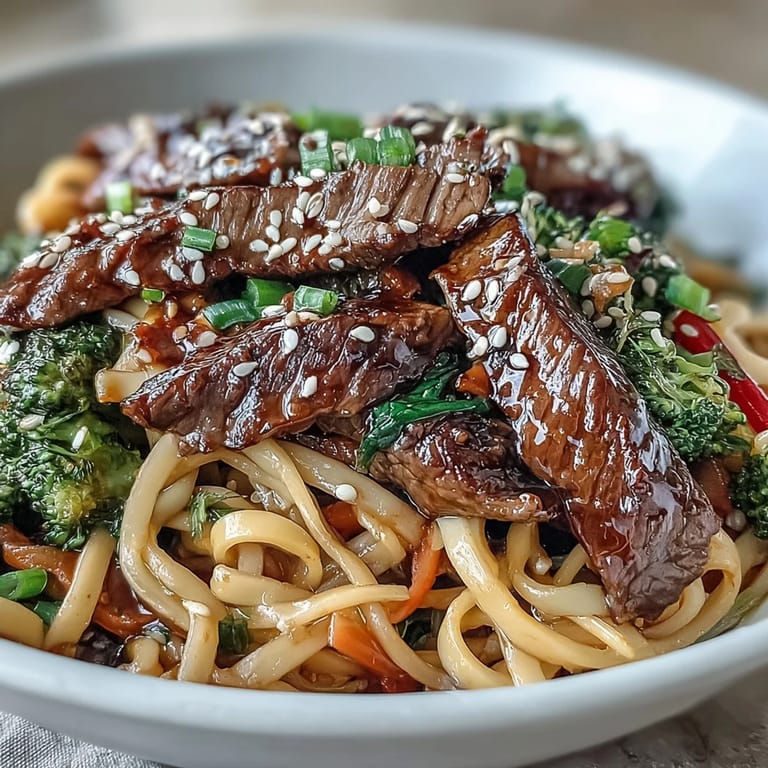
 This is the kind of meal that fills your kitchen with the smell of possibility and leaves everyone at the table reaching for seconds. Make it once, and it'll become the recipe you turn to when you need something dependable, delicious, and just a little bit special.
FAQs About This Recipe
- → What cut of beef works best for this dish?
Flank steak is ideal due to its rich flavor and tenderness when thinly sliced against the grain. Skirt steak or sirloin make excellent alternatives if flank isn't available.
- → Can I make the sauce ahead of time?
Absolutely. Combine the soy sauce, brown sugar, and sesame oil in a jar and store in the refrigerator for up to a week. The sugar will dissolve even more over time, creating a well-balanced sauce.
- → How do I prevent rice noodles from sticking together?
Rinse cooked noodles under cold water immediately after draining to remove excess starch. Toss with a small amount of sesame oil before adding to the skillet, which also adds flavor.
- → What vegetables can I substitute?
Snap peas, zucchini, shiitake mushrooms, or baby corn work wonderfully. For authentic Korean flair, try adding kimchi as a topping or stir-in during the final minutes.
- → How can I add more heat to this dish?
Stir in sriracha, gochujang (Korean chili paste), or red pepper flakes to the sauce mixture. Start with one teaspoon and adjust to your preferred spice level.
- → Is this dish suitable for meal prep?
Yes, leftovers keep beautifully in airtight containers for up to 3 days. The flavors actually develop and meld together overnight. Store noodles separately from the sauce for best texture.