 Save to Pinterest
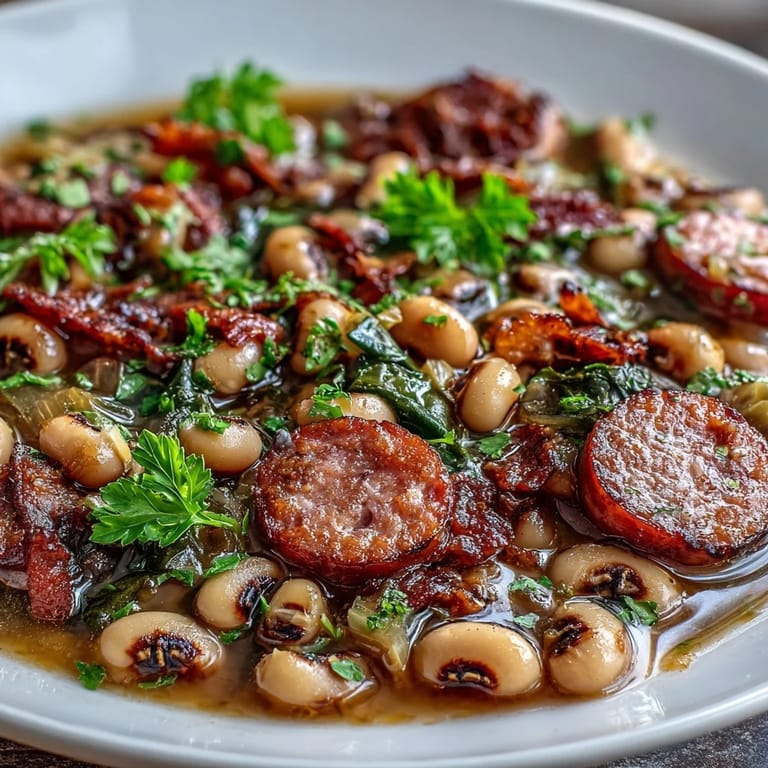
 My grandmother used to say that black-eyed peas on New Year's Day weren't just food—they were insurance, a bowl full of good fortune simmering on the stove. I didn't fully understand until I was standing in my own kitchen one January morning, the smell of smoky sausage and bacon filling the house while snow fell outside, and I realized she'd been right all along. There's something about this dish that feels both humble and celebratory, like you're honoring something old while making room for something new. The way the peas absorb all that smoky, savory depth from the broth and meat—it's pure comfort in a bowl.
I made this for my brother's poker night years ago, nervous because I'd never cooked for a crowd before. He arrived early to help, and when he lifted the lid on that pot and saw the rich, burgundy-tinted broth with those tender peas, he just grinned and said, 'You're going to win everyone over with this.' He was right—people came back for seconds before even trying the cornbread, and I've been making it that way ever since.
Ingredients
- Smoked sausage (Andouille or Kielbasa), 225 g (8 oz), sliced: This is where your smoke flavor lives—don't skip it or substitute with something mild. The slight spice and depth make the entire dish sing.
- Thick-cut bacon, 115 g (4 oz), diced: Rendered bacon fat is the foundation of everything that follows; it's what makes the aromatics taste rich and rounded.
- Dried black-eyed peas, 450 g (1 lb), rinsed and sorted: Look for peas without wrinkles or discoloration, and always sort them—a small stone hiding in there will crack a tooth.
- Onion, 1 large, diced: The backbone of the flavor base; don't rush this step, and let them soften completely before moving forward.
- Green bell pepper, 1, diced: This adds a subtle sweetness and vegetal brightness that balances the richness of the meat.
- Celery stalks, 2, diced: Often overlooked, but it's the quiet flavor that ties everything together and reminds you this is home cooking.
- Garlic cloves, 3, minced: Fresh garlic is non-negotiable here—jarred will taste thin and flat by comparison.
- Low-sodium chicken broth, 1.5 liters (6 cups): Use quality broth because you're not masking it with cream or butter; every note matters.
- Water, 240 ml (1 cup): This prevents the dish from becoming too broth-heavy while giving the peas room to absorb flavor.
- Bay leaves, 2: They infuse a subtle earthiness that emerges slowly; remove them before serving or your guest might find one and wonder about your technique.
- Smoked paprika, 1 tsp: This is what gives the broth that beautiful color and smoky undertone without overpowering anything.
- Dried thyme, 1/2 tsp: A whisper of herbaceousness that feels authentic to Southern cooking without being obvious.
- Cayenne pepper, 1/2 tsp (optional, for heat): Start with none and add gradually—you can always increase the heat, but you can't take it back.
- Freshly ground black pepper, 1/2 tsp: Freshly cracked is the only way; pre-ground tastes stale by comparison.
- Kosher salt, 3/4 tsp plus more to taste: Season in layers and taste often; the broth will concentrate as it simmers, so hold back initially.
- Fresh parsley, 2 tbsp, chopped: This brightens everything at the last moment and makes the dish look like you care.
- Hot sauce, to serve: Let people customize their own heat level—it shows respect for their palate.
Tired of Takeout? 🥡
Get 10 meals you can make faster than delivery arrives. Seriously.
One email. No spam. Unsubscribe anytime.
Instructions
- Prepare your peas:
- Soak dried black-eyed peas overnight in a large bowl covered with water, then drain and rinse thoroughly. If you're short on time, cover them with boiling water, let them sit for an hour, then drain and rinse—it's not quite as effective, but it works in a pinch.
- Render the bacon:
- Cut bacon into small dice and cook it slowly in your largest Dutch oven or heavy pot over medium heat until the edges are crispy and the fat has fully rendered. Use a slotted spoon to remove the bacon to a paper-towel-lined plate, leaving all that golden fat behind.
- Brown the sausage:
- Slice your sausage into rounds and add it to the same pot with all that bacon fat. Let it sear and brown on both sides—this takes about 5 minutes total and builds flavor you can't rush.
- Build your flavor base:
- Add your diced onion, bell pepper, and celery to the pot with all those flavorful browned bits stuck to the bottom. Sauté for 5 to 6 minutes until everything softens and becomes fragrant, then add your minced garlic for one more minute—you're looking for that moment when it smells irresistible but before it starts to brown.
- Combine everything:
- Stir in your drained peas, chicken broth, water, bay leaves, smoked paprika, thyme, cayenne if using, black pepper, and salt. Return the bacon and sausage to the pot and stir everything together, making sure nothing is stuck to the bottom.
- Simmer low and slow:
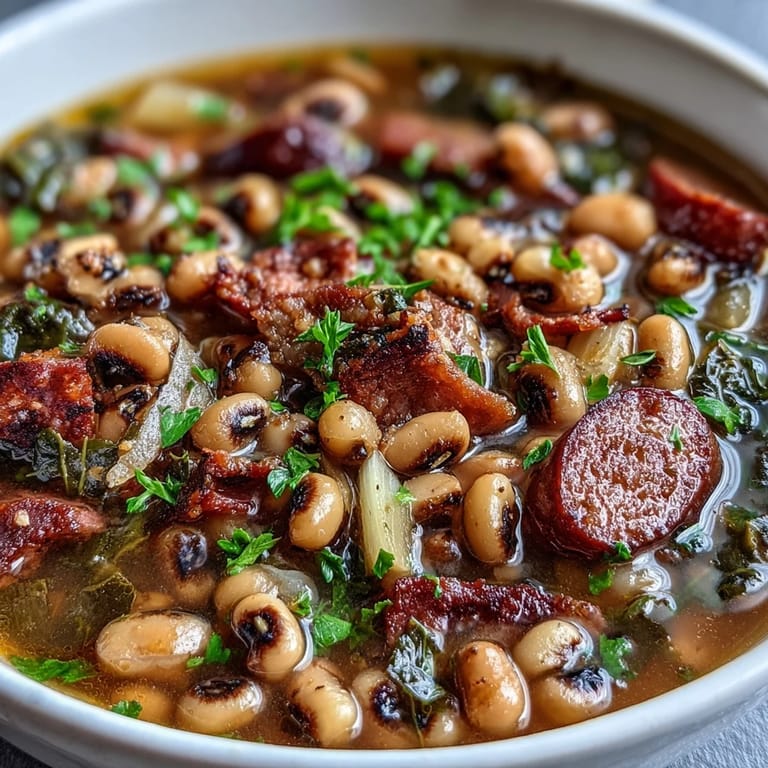
- Bring the pot to a boil, then reduce the heat to low, cover it partially with a lid, and let it simmer for 1 to 1.5 hours. The peas are ready when they're creamy and tender but not falling apart, and the broth has darkened and deepened in flavor.
- Finish and serve:
- Taste and adjust your salt and pepper—remember that the broth has concentrated, so you might need less than you think. Remove the bay leaves, scatter fresh parsley over the top, and serve hot with hot sauce on the side.
 Save to Pinterest
 One winter, a friend came over unexpectedly on January first, and I had this simmering on the stove. She took one spoonful and got quiet, and I realized later she was going through a rough patch and needed exactly this—something warm and unhurried that said 'I'm glad you're here' without needing words. That's when I understood that black-eyed peas aren't about luck at all; they're about showing up for people.
The Story Behind the Tradition
Black-eyed peas on New Year's Day isn't random—it's rooted in African American and Southern traditions that go back generations. The 'lucky' aspect comes from the fact that they're affordable, nourishing, and taste better the next day, which meant families could stretch their resources and still feel abundant. When you make this dish, you're honoring that resilience and that knowledge passed down through kitchens where people made magic with simple ingredients.
Building Flavor Layers
The secret to this dish isn't a single ingredient—it's the way flavors build on top of each other. You start by rendering fat from bacon, which means everything that comes next tastes richer. Then you brown sausage in that fat, creating fond (those browned bits) that dissolve into your broth and add depth. By the time you add the peas and broth, you've already created a flavor foundation that spending an hour simmering can only enhance. This is why rushing through the first few steps costs you quality at the end.
Serving and Storage
This dish tastes even better the next day when all the flavors have had time to marry and settle. Store it in an airtight container in the refrigerator for up to four days, or freeze it for up to three months—it reheats beautifully on the stove with a splash of broth to restore the consistency. Serve it over steamed rice, with cornbread alongside, and always offer hot sauce at the table so people can adjust the heat to their preference.
- Cornbread is not optional: Its sweetness balances the savory depth in a way that makes people want seconds.
- Rice or greens as a base: Either one works, but steamed collards add another layer of authentic Southern flavor and nutrition.
- Make extra: This freezes beautifully and becomes dinner on nights when you need comfort without effort.
 Save to Pinterest
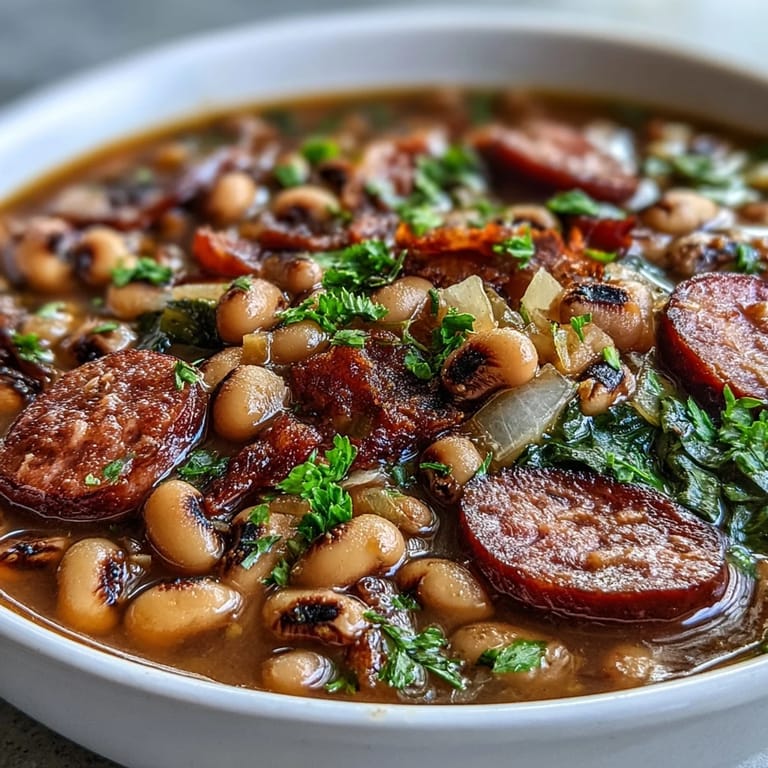
 This is the kind of dish that asks nothing of you but patience and care, and gives back warmth and comfort in return. Make it, share it, and watch how quickly it becomes part of someone's story the way it became part of mine.
FAQs About This Recipe
- → Do I need to soak dried black-eyed peas before cooking?
Yes, soaking dried black-eyed peas overnight helps them cook evenly and tenderly. For a faster method, cover them with boiling water and let stand for one hour before draining and rinsing.
- → Can I make this dish vegetarian?
Absolutely. Simply omit the bacon and sausage, use vegetable broth instead of chicken broth, and add extra smoked paprika or a few drops of liquid smoke to maintain that signature smoky depth.
- → What's the best way to serve Southern black-eyed peas?
These are traditionally served over steamed white rice with a side of buttery cornbread and sautéed collard greens. Offer hot sauce at the table so guests can adjust the heat to their preference.
- → How long should I simmer black-eyed peas?
Simmer for 1 to 1.5 hours until the peas are creamy and tender. The broth should thicken naturally and become deeply flavorful. Taste near the end of cooking and adjust salt and pepper as needed.
- → Why are black-eyed peas eaten on New Year's Day?
In Southern tradition, black-eyed peas symbolize luck and prosperity for the coming year. Their round shape represents coins, and when cooked, they swell as if your fortune will grow in the new year.
- → Can I use canned black-eyed peas instead?
You can substitute canned peas, but the texture and flavor won't be as rich. Use about 4-5 cans (drained and rinsed), reduce the broth by half, and simmer for just 30-40 minutes to blend flavors.