 Save to Pinterest
 There was a Tuesday evening when my neighbor mentioned she'd been craving beef and broccoli but couldn't justify ordering takeout again. I pulled out a wok I'd barely used and discovered that the magic wasn't some secret technique—it was respecting the heat and not crowding the pan. Twenty minutes later, watching her eyes light up at that first bite made me realize this dish deserved a permanent spot in my weeknight rotation.
My daughter once asked why I kept burning the broccoli edges until I stopped fussing with it and let the heat do the work. That small lesson shifted everything: tender interiors, caramelized tips, and a texture that made her actually eat vegetables without complaint. Now whenever someone tastes the broccoli, they're surprised it came from my kitchen.
Ingredients
- Flank steak (450 g, thinly sliced across the grain): This cut becomes impossibly tender when sliced against the grain, and thin pieces cook fast enough to stay juicy even over high heat.
- Cornstarch for beef marinade (1 tablespoon): It sounds like a fussy step, but this creates a silky coating that catches the sauce beautifully and prevents tough, rubbery meat.
- Soy sauce for marinade (1 tablespoon): Just enough to season without overwhelming; it also starts breaking down proteins for tenderness.
- Vegetable oil (2 tablespoons): High heat demands a neutral oil with a high smoke point—peanut oil works beautifully if you have it.
- Broccoli florets (300 g): Cut them similar sizes so they cook evenly; don't use tiny pieces that disappear into the sauce.
- Garlic (2 cloves, minced) and fresh ginger (1 teaspoon, grated): These go in last so they perfume the pan without burning or turning bitter.
- Soy sauce for sauce (4 tablespoons), oyster sauce (2 tablespoons), water (2 tablespoons), brown sugar (1 tablespoon), cornstarch (1 teaspoon), and sesame oil (1 teaspoon): This balance creates a glaze that clings to everything—the cornstarch thickens it, the sugar rounds out salt, and sesame oil adds richness without heaviness.
- Cooked jasmine or long-grain rice (300 g or 1½ cups): Start the rice first; it'll be ready when the stir-fry is done.
- Sesame seeds and spring onions (optional garnish): These add texture and freshness, turning dinner into something that feels intentional.
Tired of Takeout? 🥡
Get 10 meals you can make faster than delivery arrives. Seriously.
One email. No spam. Unsubscribe anytime.
Instructions
- Coat the beef in its marinade:
- Toss the sliced beef with soy sauce and cornstarch in a bowl, making sure each piece is lightly coated. This 10-minute rest isn't just about flavor—it's about creating the texture that makes this dish worth making.
- Prepare your sauce ahead:
- Whisk all sauce ingredients together in a small bowl so you're not scrambling when the heat kicks up. A premixed sauce also lets you taste and adjust before it hits the hot pan.
- Stir-fry the broccoli first:
- Heat 1 tablespoon oil over high heat until it shimmers, then add broccoli and let it sit undisturbed for about 30 seconds so the edges develop some color. Toss and cook 2–3 minutes until the florets are bright green with a few caramelized spots, then transfer to a plate.
- Cook the beef properly:
- Add the remaining oil to the hot pan and spread the marinated beef in a single layer—don't stir it for the first minute. Let gravity and heat create browning and crust before you break it up and finish cooking, 2–3 minutes more until it's mostly done but still slightly soft to the touch.
- Bloom the aromatics:
- Add minced garlic and ginger for just 30 seconds, stirring constantly so they perfume the oil without scorching. The smell is your signal; when it hits your nose like a gentle punch, you're done.
- Bring it all together:
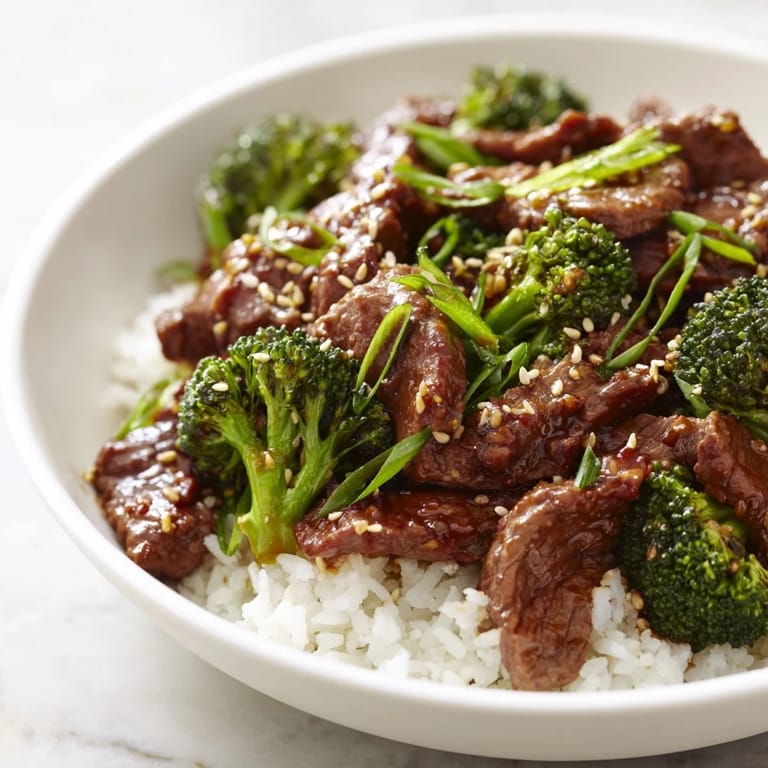
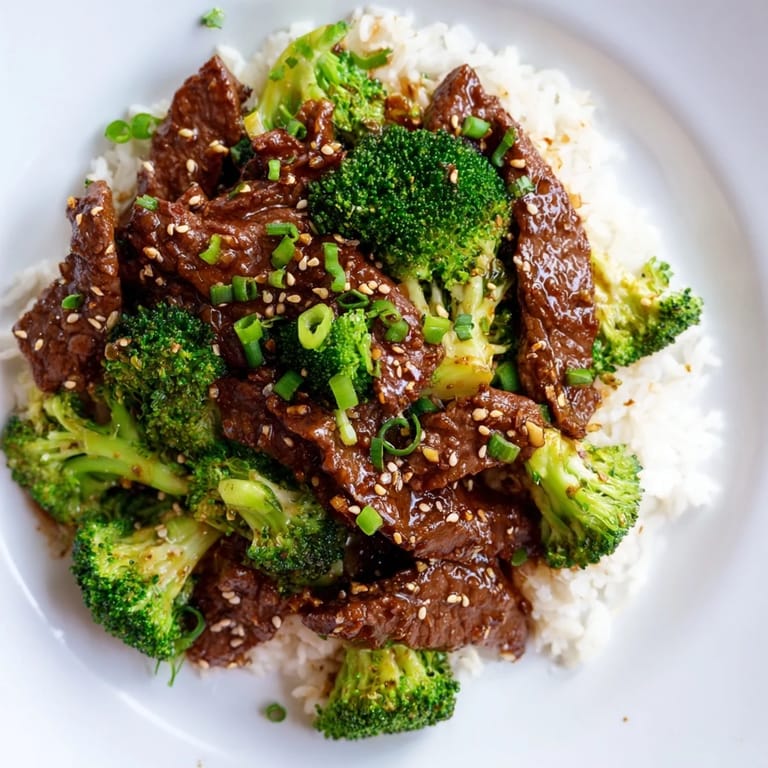
- Return the broccoli to the pan, pour in the prepared sauce, and stir everything constantly for 1–2 minutes until the sauce thickens into a glossy coat that clings to the beef and broccoli.
- Serve immediately:
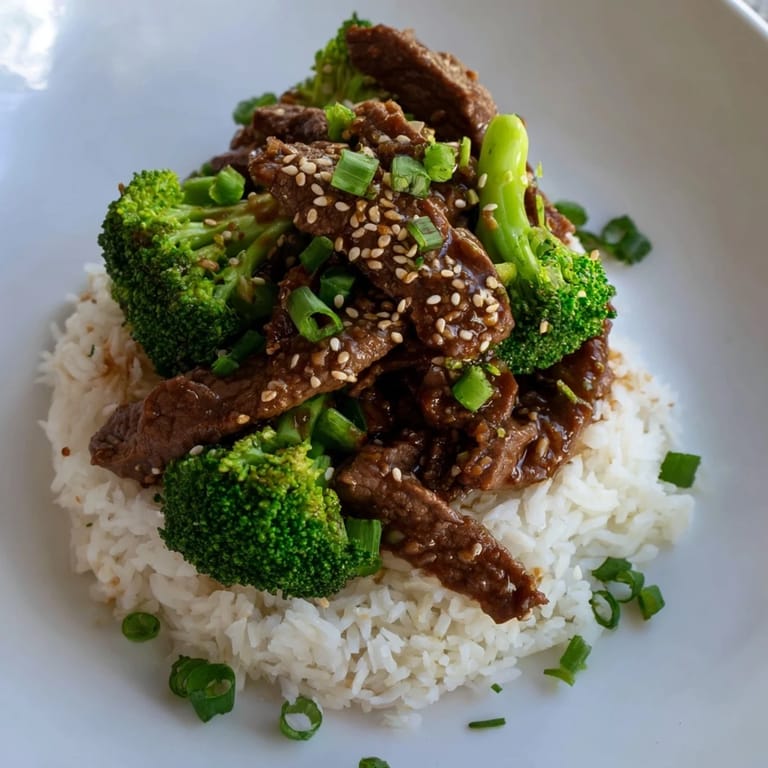
- Divide rice among bowls, top with the stir-fry, and garnish with sesame seeds and spring onions if you have them. The sauce thickens as it cools, so timing is everything.
 Save to Pinterest
 I once made this for a friend who was sure she didn't like broccoli, and she ate it silently, methodically, without complaint. She never mentioned the broccoli at all—just asked for the recipe and to know when I was making it again. That's when I realized this dish isn't about impressing anyone; it's about transforming simple things into something people actually crave.
The Science of Texture
The cornstarch in the marinade isn't decoration—it gelatinizes when the beef cooks, creating a velvety coating that traps the sauce and keeps it from running off into the rice. The same cornstarch in the sauce thickens it without the heaviness of flour, so everything stays bright and light. Understanding this transforms beef and broccoli from something you tolerate into something you plan meals around.
Building Heat in a Small Space
A wok heats faster and more unevenly than a flat-bottomed skillet, which sounds bad but is actually perfect for stir-frying. The sides stay slightly cooler, giving you a safety zone to toss ingredients without them cooking to dust. If you don't have a wok, a large skillet works fine—just make sure the bottom is heavy and the sides are high enough that things don't bounce out when you're stirring quickly.
Flavor Adjustments and Variations
The sauce as written is balanced and forgiving, but every stove and every palate is different. I've learned to taste the raw sauce mixture before cooking—if it tastes too salty, add a splash of water; if it's too sweet, a dash of vinegar or lime juice pulls it back. Some nights I add a tiny pinch of white pepper, other times a half-teaspoon of chili flakes for heat.
- Swap beef for chicken breast cut thin, or use press-dried tofu cubes for a vegetarian version with the same textural satisfaction.
- Add a splash of rice wine or mirin to the sauce for deeper umami, or a squeeze of lime juice at the very end for brightness.
- Ginger is optional if you dislike it, but even garlic-averse people don't notice a teaspoon of fresh ginger once it's cooked into the sauce.
 Save to Pinterest
 This recipe became part of my regular week because it taught me that simple doesn't mean boring, and weeknight food doesn't have to feel like a compromise. Once you nail the technique, you'll keep coming back because it's faster than takeout and a thousand times more satisfying.
FAQs About This Recipe
- → What cut of beef works best for this stir-fry?
Flank steak is ideal because it's lean, cooks quickly, and slices thinly for tender bites.
- → How do I keep broccoli crisp during cooking?
Stir-fry the broccoli briefly over high heat until bright green and just tender to retain its crispness.
- → Can I substitute any ingredients for dietary needs?
Yes, you can swap beef with chicken or tofu and use tamari for gluten-free soy sauce alternatives.
- → What is the role of cornstarch in the marinade and sauce?
Cornstarch helps tenderize the beef and thickens the sauce for a smooth coating on the ingredients.
- → How should I serve this dish for best flavor?
Serve immediately over steamed jasmine rice and garnish with sesame seeds and sliced spring onions if desired.
- → Can I add spice to this dish?
A pinch of chili flakes added to the sauce can provide a subtle spicy kick without overpowering the flavors.