 Save to Pinterest
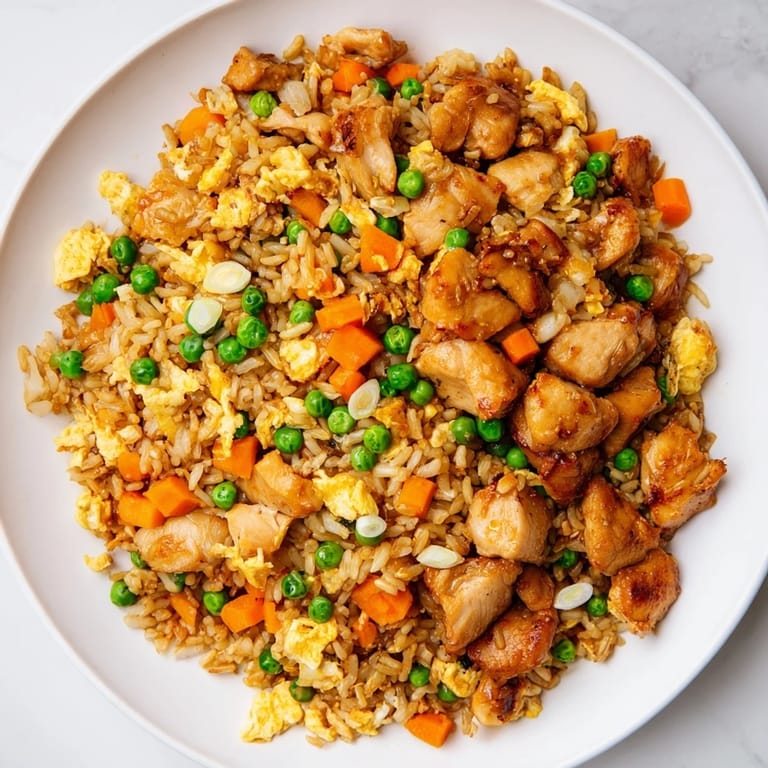
 There's something about the smell of chicken hitting hot oil that makes you feel like you're actually cooking something worthwhile. My first chicken fried rice came together on a random Tuesday night when I had leftover rice, half a chicken breast, and the kind of hunger that won't wait for takeout. What started as improvisation turned into something I'd make every other week, mostly because it tastes like comfort food that doesn't apologize for being simple.
I made this for my roommate after she'd had a brutal day at work, and watching her face light up when she tasted it reminded me why home cooking matters more than any recipe card suggests. She ate it standing at the counter, and I knew right then this was the kind of dish that fixes things.
Ingredients
- Chicken breast or thigh, 300g diced: Thigh stays juicier if you're not careful with the heat, but breast works fine if you don't overcook it past that golden stage.
- Eggs, 2 large: These aren't a garnish here—they're what makes the rice creamy and luxurious without cream.
- Carrot, 1 medium diced: The sweetness balances the salty soy, and it holds its texture better than softer vegetables.
- Frozen peas, 100g: Honestly better than fresh because they're already cooked and they don't turn mushy in the wok.
- Onion, 1 small finely chopped: This forms the flavor base—don't skip it even if onions aren't your thing.
- Spring onions, 2 sliced (plus extra for garnish): The fresh ones at the end bring the dish back to life after all that heat.
- Cooked rice, 500g preferably day-old: This is the secret—day-old rice separates beautifully, while fresh rice clumps and gets gluey.
- Soy sauce, 3 tbsp: Adjust based on your brand's saltiness; some are aggressive.
- Oyster sauce, 1 tbsp optional: The umami deepener that makes people ask what you did differently.
- Sesame oil, 1 tsp: A little goes a long way; more than this tastes like perfume, not food.
- Ground white pepper, 1/2 tsp: Warmer than black pepper and dissolves into the rice rather than sitting gritty.
- Vegetable oil, 2 tbsp divided: Keep the heat high so the chicken and vegetables cook fast and stay crisp.
Tired of Takeout? 🥡
Get 10 meals you can make faster than delivery arrives. Seriously.
One email. No spam. Unsubscribe anytime.
Instructions
- Set up your station:
- Dice everything and have it waiting in separate bowls—once the wok gets hot, you won't have time to chop. If your rice is fresh, spread it on a plate to dry out a bit while you prep.
- Sear the chicken golden:
- Heat 1 tbsp oil until it shimmers, then add chicken and don't move it for the first 2 minutes so it catches color. You want it cooked through but still tender, about 4 to 5 minutes total.
- Build the vegetable base:
- Add the remaining oil, then onion and carrot—let them soften and start to caramelize slightly, which takes just 2 to 3 minutes. Toss in the peas for another minute so they warm through.
- Scramble in the eggs:
- Push vegetables to the side, crack eggs right into the bare wok space, and scramble them gently until they're just set. They'll keep cooking when you mix everything, so don't overdo it.
- Bring the rice alive:
- Add all the rice and break up clumps by stirring constantly—this is where day-old rice shines because it won't stick together. You're looking for every grain to be separated and coated in a little oil.
- Return the chicken and season:
- Add the cooked chicken back in, pour in soy sauce, oyster sauce if using, sesame oil, white pepper, and a pinch of salt. Stir everything for 2 to 3 minutes so the flavors coat every surface.
- Finish with brightness:
- Stir in the spring onions, taste, and adjust salt or soy to your preference. The dish should taste savory and balanced, not one-note salty.
- Serve immediately:
- Fried rice loses its appeal once it cools, so get it on plates while it's still steaming.
 Save to Pinterest
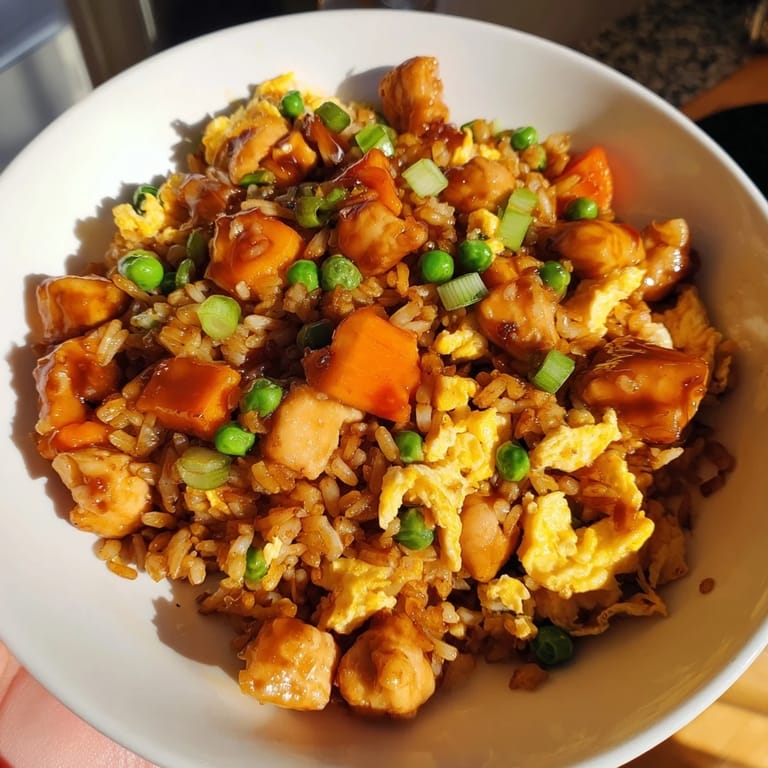
 There's a moment when everything hits the pan at once and the smell becomes something almost tangible, like you've caught it in a net. That's when you know it's working.
Why Day-Old Rice Changes Everything
The difference between day-old rice and fresh rice in a wok is the difference between fried rice and rice soup. Day-old rice has had time to dry out slightly in the fridge, so each grain is separate and firm enough to absorb the soy sauce without turning mushy. If you only have fresh rice, spread it on a sheet pan and let it cool completely, then refrigerate it for at least an hour before cooking.
Making It Your Own
This recipe is flexible enough that you can swap proteins without changing anything else—shrimp cooks in about 2 minutes, pork takes the same time as chicken, and tofu just needs to warm through. The vegetables are just as forgiving; if you don't have peas, use corn or snap peas or bean sprouts, and if carrots aren't around, bell peppers work just fine. The soy sauce and sesame oil are what tie it all together, so those are worth respecting.
The Small Things That Matter
Texture is everything in fried rice, and that comes from heat and movement. A low flame will give you rice that tastes cooked but feels soft; a high flame gives you grains that still have some resistance, edges that catch a little color, and an overall dish that feels more alive on your tongue. Don't be afraid of the heat, and don't skip the step of breaking up the rice—lumps will hide soy sauce and stay bland in the middle.
- Taste constantly as you go, because soy sauce brands vary wildly in saltiness.
- Keep a small bowl of water nearby in case the pan gets too dry—a splash helps rice separate.
- If you have garlic or ginger around, a teaspoon of minced garlic or half a teaspoon of ginger goes into the oil before the onions.
 Save to Pinterest
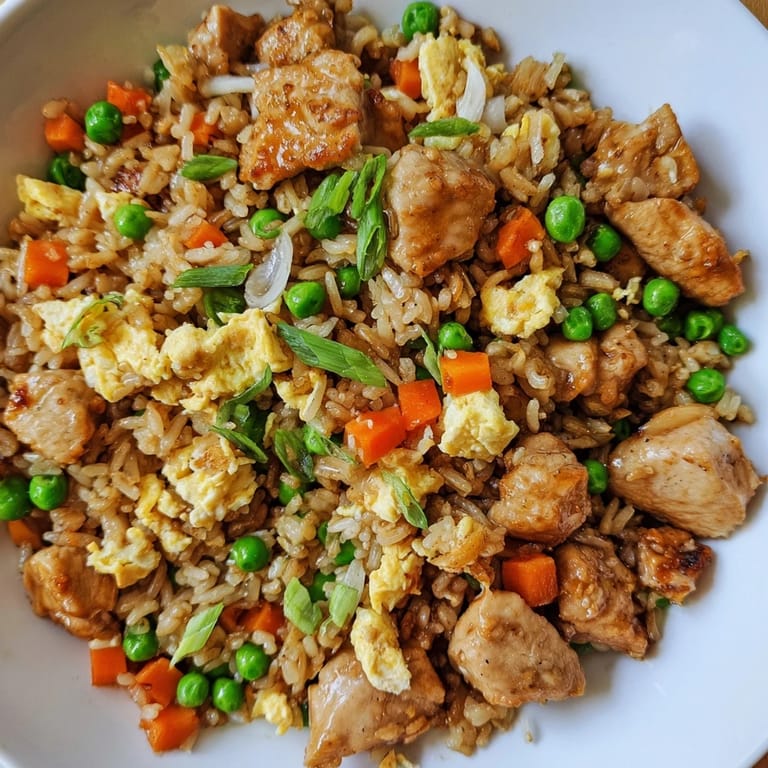
 Chicken fried rice is the kind of cooking that teaches you to trust your instincts more than the recipe. Make it enough times and you'll know just by the sound if the heat is right.
FAQs About This Recipe
- → Can I use other proteins instead of chicken?
Yes, shrimp, pork, or tofu can be great alternatives depending on your preference.
- → What type of rice works best for this dish?
Day-old jasmine or long-grain rice is ideal as it’s less sticky and fries better.
- → How do I prevent the rice from clumping?
Spreading fresh rice to cool and drying it slightly before frying helps keep grains separate.
- → Can I adjust the seasoning to taste?
Absolutely. Soy sauce, pepper, and salt can be added incrementally to suit your flavor preferences.
- → Are there any suggested vegetable additions?
Bell peppers, corn, or bean sprouts work well to add extra texture and color.