 Save to Pinterest
 I discovered poke bowls on a sweltering July afternoon when my neighbor brought one over, still condensing in its container, and I watched her dig in with such obvious joy that I had to ask for the story. Turns out she'd just returned from Honolulu, where she'd eaten the same bowl every morning before sunrise, sitting on a beach she now missed terribly. That night, I started chopping and marinating, trying to recreate that feeling of escape in my own kitchen, and honestly, it worked better than I expected. The salty-sweet fish, the cool vegetables, the way everything came together in less than an hour—it became my answer to wanting Hawaii without leaving home.
I made this for my partner's team one summer evening, and watching everyone build their own bowl with their own toppings felt like hosting a dinner party without the stress. Someone asked for extra spicy mayo, someone else skipped the fish entirely and piled on edamame instead, and it occurred to me that poke bowls are one of those rare dishes where everyone leaves happy because everyone got exactly what they wanted. That's when I realized this recipe wasn't just about the food—it was about giving people control and letting them feel creative in your kitchen.
Ingredients
- Sushi-grade salmon or tuna, 400g, diced: Use the freshest fish you can find—this is the star, and its quality matters more than anything else.
- Soy sauce: The backbone of the marinade, bringing umami and saltiness that makes the fish sing.
- Sesame oil: Just a tablespoon adds nutty warmth and prevents the fish from tasting one-dimensional.
- Rice vinegar: Brings brightness and keeps everything from feeling heavy.
- Honey or agave syrup: A touch of sweetness that balances the salty-savory elements beautifully.
- Fresh ginger, grated: This small amount provides a gentle bite that wakes up your palate.
- Sesame seeds: Not just decoration—they add texture and toasted flavor that makes the marinade feel complete.
- Sushi rice or short-grain rice, 320g: The foundation that matters; it should be slightly sticky so the toppings don't slide around.
- Water for rice, 480ml: The exact ratio keeps the rice from being mushy or dry.
- Rice vinegar for seasoning rice: This is different from the marinade vinegar—it cools the rice and adds subtle tang.
- Sugar and salt for rice: These balance the vinegar and make the rice taste intentional, not bland.
- Avocado, ripe but still firm: Slice it just before assembly so it doesn't brown or get sad-looking.
- Cucumber, thinly sliced: Provides cool crispness that contrasts with warm rice and rich fish.
- Carrots, julienned: A bit of sweetness and crunch that feels fresh without being boring.
- Edamame, shelled and cooked: Adds protein and a mild, slightly earthy flavor that works with everything.
- Radishes, thinly sliced: The peppery snap everyone forgets they love until they taste it.
- Spring onions, thinly sliced: A little green onion goes a long way to brighten the whole bowl.
- Nori sheets, cut into strips: Don't skip this—the umami from seaweed ties everything together.
- Toasted sesame seeds for garnish: These are toasted, which means warmer and more flavorful than raw.
- Microgreens or sprouts: Optional but they add a delicate peppery note if you have them.
- Spicy mayo: Made fresh by mixing mayo with sriracha—homemade tastes better than bottled.
- Extra soy sauce for drizzling: Everyone has different salt preferences, so let people control this.
- Pickled ginger and lime wedges: These are optional but they transform a good bowl into an experience.
Tired of Takeout? 🥡
Get 10 meals you can make faster than delivery arrives. Seriously.
One email. No spam. Unsubscribe anytime.
Instructions
- Rinse and cook the rice:
- Run the sushi rice under cold water, stirring gently with your fingers until the water runs clear—this removes excess starch and keeps the rice from turning into mush. Combine the rinsed rice with water in a medium saucepan, bring to a boil, then reduce heat to low, cover, and simmer for exactly 15 minutes.
- Steam and season the rice:
- Remove the pot from heat and let it sit covered for 10 minutes—this finishing steam is what makes sushi rice taste professional. Stir in rice vinegar, sugar, and salt while the rice is still warm so the flavors absorb evenly, then set aside to cool slightly.
- Prepare the marinade:
- In a separate bowl, whisk together soy sauce, sesame oil, rice vinegar, honey, ginger, and sesame seeds until the honey dissolves completely. Taste it—it should smell fragrant and balanced, not too salty or too sweet.
- Marinate the fish:
- Add your diced sushi-grade fish to the marinade and toss gently so every piece gets coated without breaking apart. Refrigerate for 10–15 minutes—this is long enough to flavor the fish but short enough to keep it from getting mushy.
- Slice and prep all toppings:
- While the fish marinates, slice your avocado, cucumber, radishes, and spring onions, and julienne your carrots. Make sure your edamame are cooked and cooled slightly, and cut your nori into thin strips.
- Assemble each bowl:
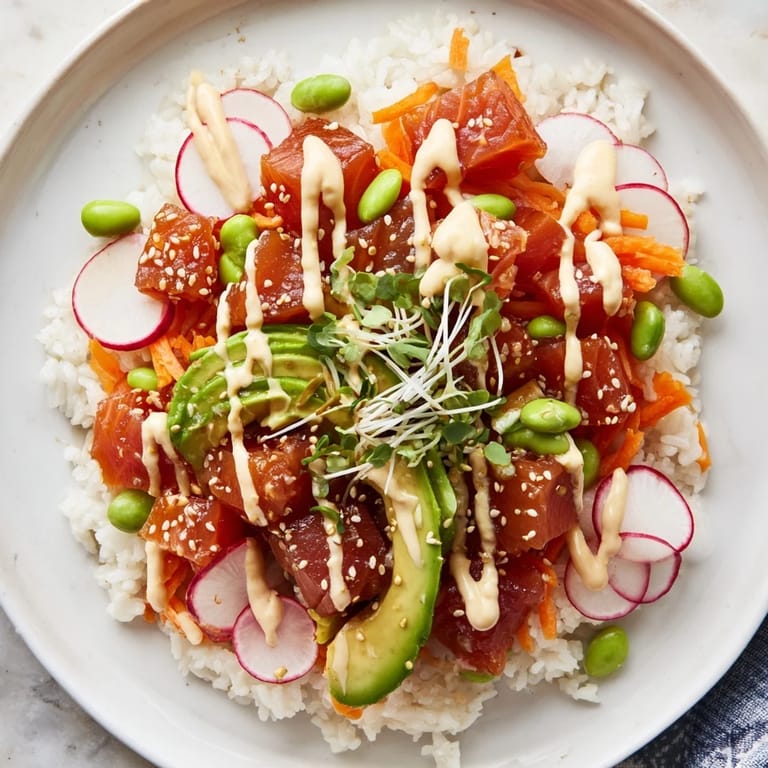
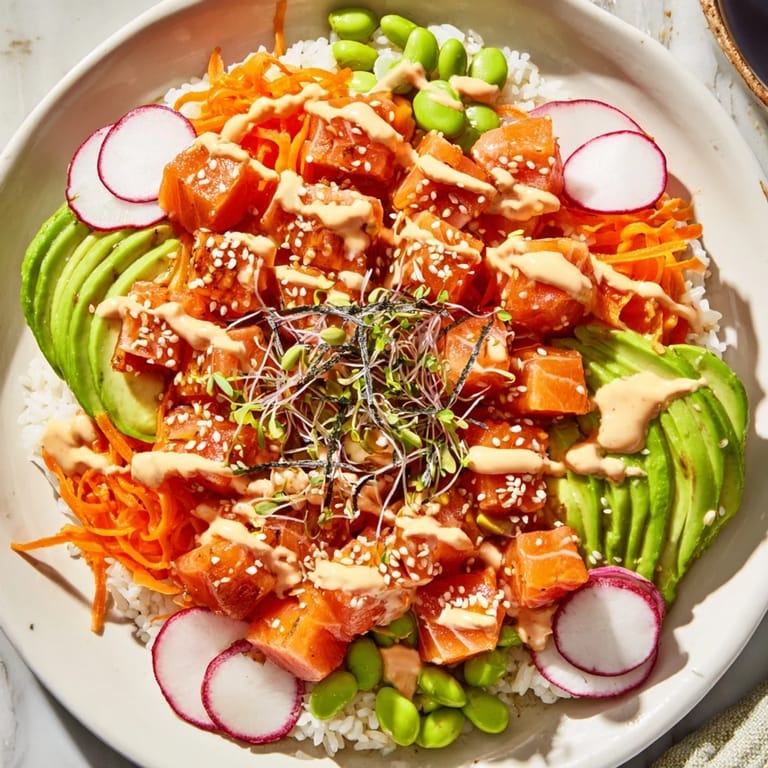
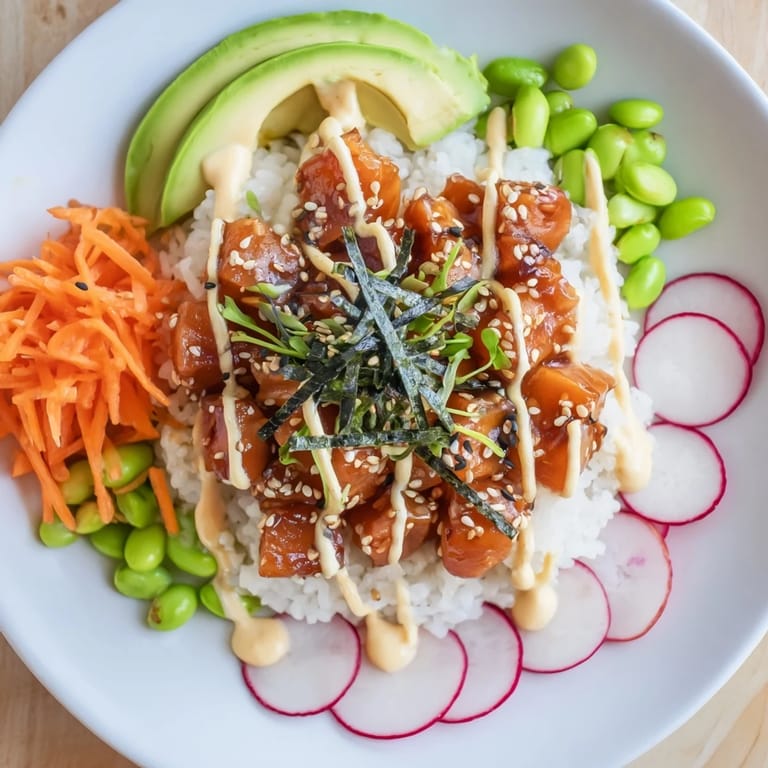
- Divide the cooled sushi rice among four bowls, creating a base. Arrange the marinated fish on top of the rice, then distribute avocado, cucumber, carrots, edamame, radishes, and spring onions around the bowl in sections—it should look abundant and colorful.
- Garnish and finish:
- Top with nori strips, toasted sesame seeds, and microgreens if you have them. Drizzle generously with spicy mayo and extra soy sauce, then add pickled ginger and a lime wedge on the side if desired.
- Serve immediately:
- The rice should still be slightly warm, the vegetables crisp, and everything fresh-tasting—this is not a dish that improves sitting in the fridge.
 Save to Pinterest
 I remember my friend who's usually skeptical about raw fish taking one bite and going quiet in that way that means something just clicked for them. She asked if I'd made the rice myself, as if homemade rice was the secret, and I realized that people often overlook how much the small details matter—the properly seasoned rice, the fresh ginger, the balance between the marinade and the crisp vegetables. That's when poke stopped being a trendy bowl and became something I understood deeply.
Why Rice Temperature and Timing Matter
The moment between cooking the rice and assembling the bowls is more important than most people realize. If you work too quickly, the warm rice will start cooking the fish and making everything collapse into soft mush; if you wait too long, the rice gets cold and dense and loses its light texture. I learned this the hard way by making poke for a group and having the first two bowls turn out beautiful while the last two looked like someone had sat on them. Now I time it so the rice is still warm but not steaming when I start building, and the difference is honestly night and day.
The Spicy Mayo Game
There's a moment when you realize that the spicy mayo can make or break the entire experience, and it's usually when someone at your table decides to skip it and then regrets it immediately. The mayo adds richness and a creamy contrast to the clean, bright flavors, while the sriracha brings heat and depth that prevents the bowl from feeling one-note. I've also learned that if you make the spicy mayo ahead of time, it tastes better the next day because the sriracha flavor integrates more fully, so if you're entertaining, mix it up in the morning.
Building Flavor and Customization
One of the best parts about poke bowls is how forgiving they are—you can substitute the fish with marinated tofu if someone's vegetarian, swap carrots for mango if you're feeling summer, or add pickled ginger if you want brightness. I've also found that letting people build their own bowls at the table is infinitely more fun than plating them in the kitchen, because everyone feels like a chef and everyone gets exactly what they want. The rice, the fish, the sauce—those stay the same—but everything else can shift based on what's in your fridge or what sounds good that day.
- For a vegetarian version, marinate cubed tofu or tempeh in the same marinade for 20 minutes instead of fish.
- Seasonal vegetables like mango, pineapple, or roasted beets work beautifully—just keep the rice and marinade consistent.
- If you're making these ahead for meal prep, keep the rice and marinade separate from the fresh toppings and assemble just before eating.
 Save to Pinterest
 There's something deeply satisfying about a poke bowl—the way all those textures and flavors work together without fighting, the fact that it looks like you spent hours on it when you really didn't. Every time I make one, I think about that neighbor and her beach memories, and I'm grateful that she shared that afternoon of longing over a container of beautiful fish and rice. Now when I eat poke, I'm not just feeding myself—I'm recreating a feeling, and somehow that makes everything taste better.
FAQs About This Recipe
- → What type of fish is best for this bowl?
Sushi-grade salmon or tuna works best due to their texture and flavor, ensuring freshness and safety for raw consumption.
- → How can I prepare the rice for optimal flavor?
Cook short-grain rice until tender, then season with rice vinegar, sugar, and salt for a subtle tang that complements the other ingredients.
- → Are there alternatives for those who avoid seafood?
Yes, marinated tofu or tempeh are great substitutes that absorb the marinade well and provide a satisfying texture.
- → What toppings add the best texture and freshness?
Julienned carrots, sliced cucumber, radishes, edamame, and spring onions contribute crispness and vibrant flavors to balance the bowl.
- → How is the spicy mayo prepared?
Mix mayonnaise with sriracha sauce to desired heat level, then drizzle over the bowl to add creaminess and a spicy kick.