 Save to Pinterest
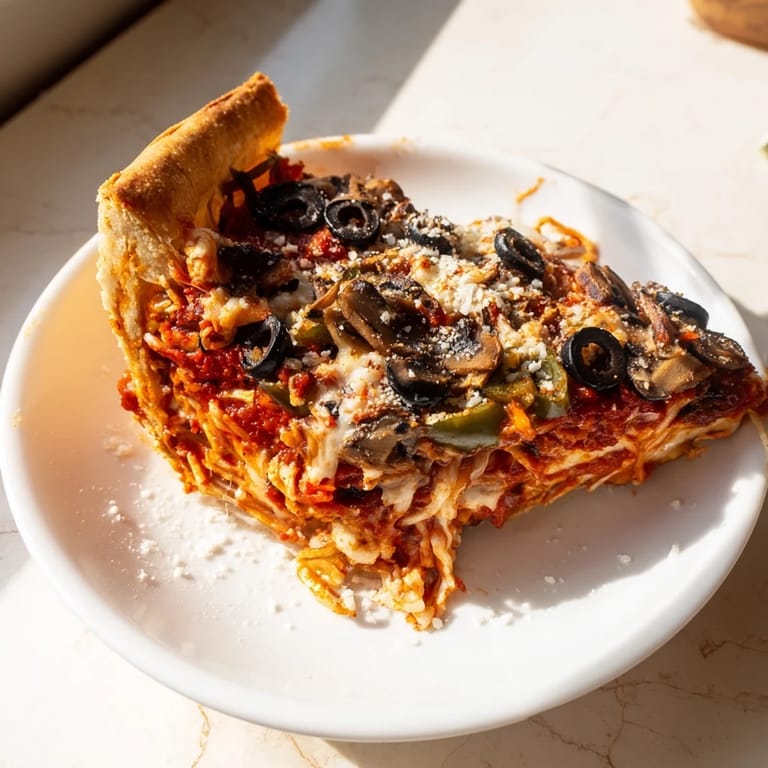
 There's something about deep-dish pizza that stops a conversation mid-sentence. I learned this the hard way on a January evening when I pulled a golden, bubbling pan out of my oven, and three friends who'd been debating the best pizza in the city went completely silent. That first slice, with its thick, buttery crust giving way to molten cheese and chunky tomato sauce, settled the argument without a single word. Chicago-style pizza isn't just food; it's an experience that fills your kitchen with anticipation while it bakes.
I made this for my sister's birthday dinner, and she barely finished her first slice before asking for the recipe. She said it tasted like the pizza she'd had on a trip to Chicago years ago, and suddenly my kitchen wasn't just where I was cooking—it was where a memory came back to life. That's when I realized this recipe wasn't really about perfecting a technique; it was about recreating a moment someone had been craving.
Ingredients
- All-purpose flour: The foundation of everything; the 400 grams of flour gives you structure and the gluten network you need for that chewy texture.
- Yellow cornmeal: This isn't just filler—it adds a subtle sweetness and grit that makes the crust distinctly Chicago, and it prevents sticking on your pan.
- Active dry yeast: One packet (2 1/4 teaspoons) wakes up in warm water and transforms your dough into something airy and complex over the hour it rises.
- Warm water: The magic starts here; too hot and you'll kill the yeast, too cold and nothing happens, so aim for around 110°F.
- Olive oil and melted butter: Together, they make the dough impossibly rich and give the finished crust that golden, crispy bottom layer.
- Shredded mozzarella cheese: Three cups might seem like a lot, but this is deep-dish pizza—the cheese is a main character, not a supporting role.
- Grated Parmesan cheese: A half cup sprinkled over the sauce adds a sharp, savory note that cuts through the richness beautifully.
- Crushed tomatoes: A 28-ounce can of whole tomatoes simmered with aromatics becomes a sauce that's chunky enough to be satisfying but smooth enough not to tear your crust.
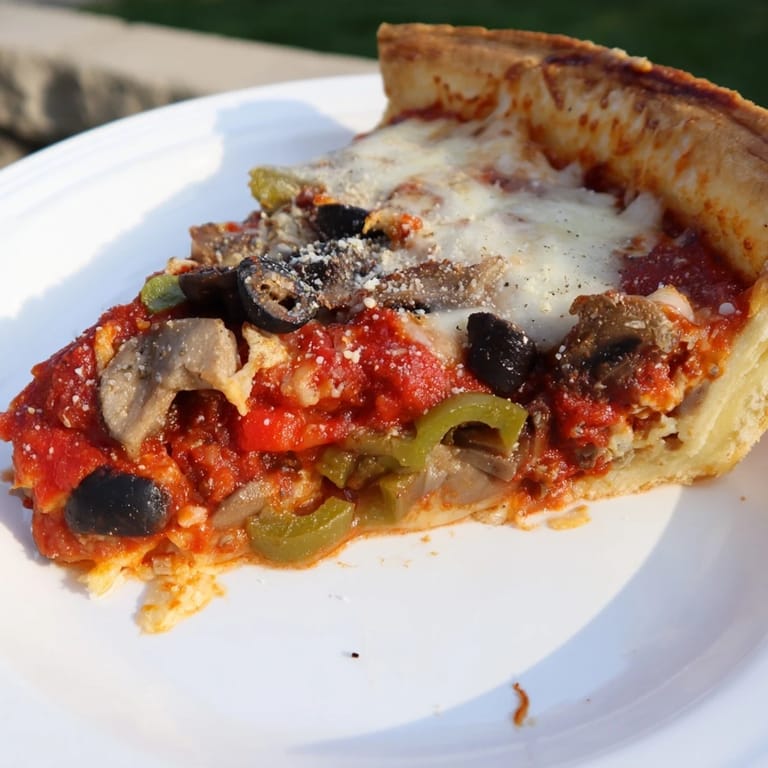
- Mushrooms, bell peppers, and olives: These are the vegetables that stay present throughout baking, holding their shape and flavor.
- Dried oregano and basil: A teaspoon of each in the sauce creates the herbaceous backbone that makes this taste like pizza, not just bread and cheese.
Tired of Takeout? 🥡
Get 10 meals you can make faster than delivery arrives. Seriously.
One email. No spam. Unsubscribe anytime.
Instructions
- Wake up the yeast:
- Pour 1 1/4 cups of warm water into a bowl and sprinkle the yeast over it, then wait. After 5 minutes, you'll see a foamy cap forming on top—that's the yeast waking up and getting ready to work. If it doesn't foam, your water was probably too hot or too cold, so start over with fresh yeast.
- Build the dough:
- Add the flour, cornmeal, salt, olive oil, and melted butter to the yeast mixture and stir until everything comes together into a shaggy mass. This is where things get tactile—knead for 5 to 7 minutes until the dough becomes smooth and elastic, feeling almost alive under your hands.
- Let it rise:
- Move the dough to a greased bowl, cover it with a kitchen towel, and let it sit undisturbed for an hour. The warmth of your kitchen and the patient yeasts will double its size—you'll be amazed at the transformation.
- Simmer the sauce:
- While the dough rises, heat 2 tablespoons of olive oil in a saucepan over medium heat and add minced garlic, letting it smell incredible for about a minute. Pour in the crushed tomatoes, oregano, basil, sugar, salt, and pepper, then simmer gently for 20 minutes so the flavors meld and the sauce loses its raw edge.
- Prepare the pan:
- Preheat your oven to 425°F and grease a 12-inch deep-dish pan or round cake pan generously with olive oil—this prevents sticking and adds richness to the crust bottom.
- Shape and layer:
- Press the risen dough into the pan, pushing it up the sides firmly so it forms high edges that will contain all that cheese and sauce. Spread the mozzarella evenly over the base, then scatter your toppings (pepperoni, mushrooms, peppers, olives) in whatever pattern feels right.
- Add the finishing touches:
- Pour the tomato sauce evenly over the toppings, letting it settle into the spaces, and finish with a generous sprinkle of Parmesan cheese on top.
- Bake until golden:
- Slide the whole thing into the oven for 35 to 40 minutes, watching for that moment when the crust turns golden brown at the edges and the sauce bubbles actively around the perimeter. If the edges brown too quickly before the center is done, drape some foil over them and keep baking.
- Rest and serve:
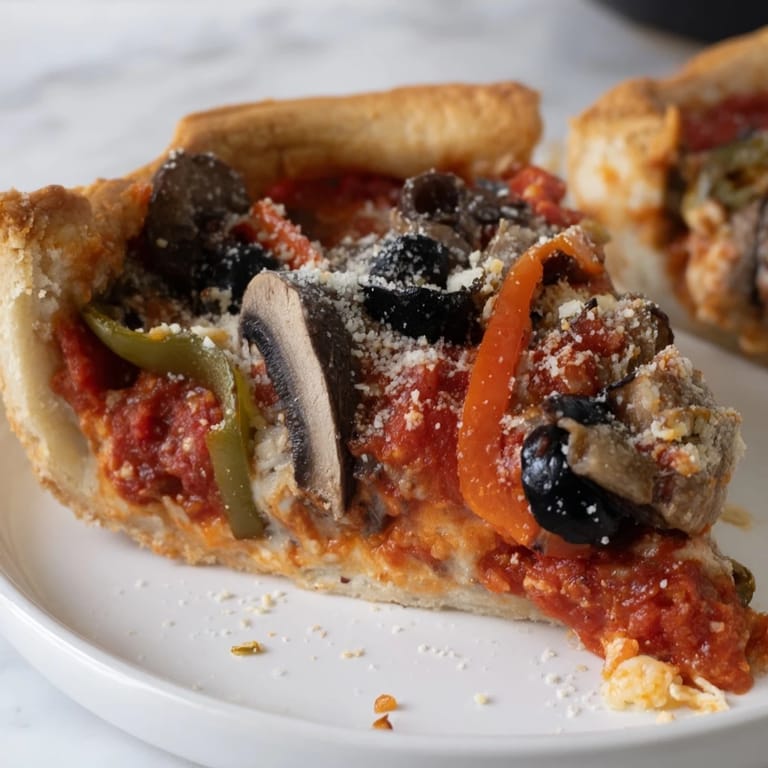
- Pull the pizza out and let it rest for 10 minutes—this isn't laziness, it's patience that prevents the cheese from sliding off when you slice it. Your reward is a pizza that slices cleanly and holds its toppings.
 Save to Pinterest
 The best part about deep-dish pizza isn't the eating, though that's pretty good—it's the ten minutes before you slice it, when the aroma is so thick you could almost eat it. That's when my kitchen becomes a gathering place, and people start hovering nearby, drawn in by anticipation.
Why Deep-Dish Pizza Deserves Its Own Night
Making deep-dish pizza from scratch is a commitment, but it's the kind of commitment that pays dividends. This isn't a quick weeknight dinner; it's a project that deserves your attention and time. The beauty is that most of the time is passive—the dough rising while you make sauce, the pizza baking while you set the table. There's something deeply satisfying about building something this substantial with your own hands, and the results are restaurant-quality without needing a brick oven.
The Cheese Question
I've experimented endlessly with cheese combinations, and while mozzarella is non-negotiable for that melty base, blending it with provolone adds a sharper, richer complexity that lingers. Some people swear by adding a layer of white cheddar or even a touch of smoked gouda, and honestly, there's no wrong answer as long as you're starting with three cups of cheese as your foundation. The Parmesan on top isn't optional—it's the flavor anchor that ties everything together and prevents the pizza from feeling one-dimensional.
Topping Strategy and Serving Suggestions
The beauty of deep-dish pizza is that you're in control of every layer, which means you can build it exactly as you like it. I've learned that precooking mushrooms slightly before adding them prevents the pizza from becoming too watery, and grouping similar toppings together (pepperoni on one side, vegetables on the other) can be a nice visual touch for a crowd. A light Italian red wine like Chianti pairs beautifully with this pizza—the acidity cuts through the richness in a way that feels like it was meant to be.
- If you're short on time, quality store-bought pizza dough works in a pinch and still yields impressive results.
- Leftovers reheat surprisingly well in a 350°F oven for about 10 minutes if you have any left over.
- For a vegetarian version, skip the meat toppings and lean into roasted vegetables or caramelized onions for depth.
 Save to Pinterest
 There's a reason deep-dish pizza has a devoted following—it's not just about the food, it's about the experience of making something hearty and real. Once you've mastered this, you'll find yourself making it again and again.
FAQs About This Recipe
- → What type of flour is best for the dough?
All-purpose flour combined with yellow cornmeal creates the ideal texture for a tender yet sturdy deep dish crust.
- → How long should the dough rise before baking?
Allow the dough to rise for about 1 hour or until it doubles in size to achieve the perfect texture.
- → Can I use store-bought dough for convenience?
Yes, store-bought dough can be used to save time while still achieving a satisfying deep dish crust.
- → What is the best way to prevent the crust edges from burning?
Cover the edges with foil during baking if they brown too quickly to keep the crust evenly golden.
- → How can I make a vegetarian version?
Simply omit meat toppings and add extra vegetables like mushrooms, bell peppers, or olives for a flavorful vegetarian option.