 Save to Pinterest
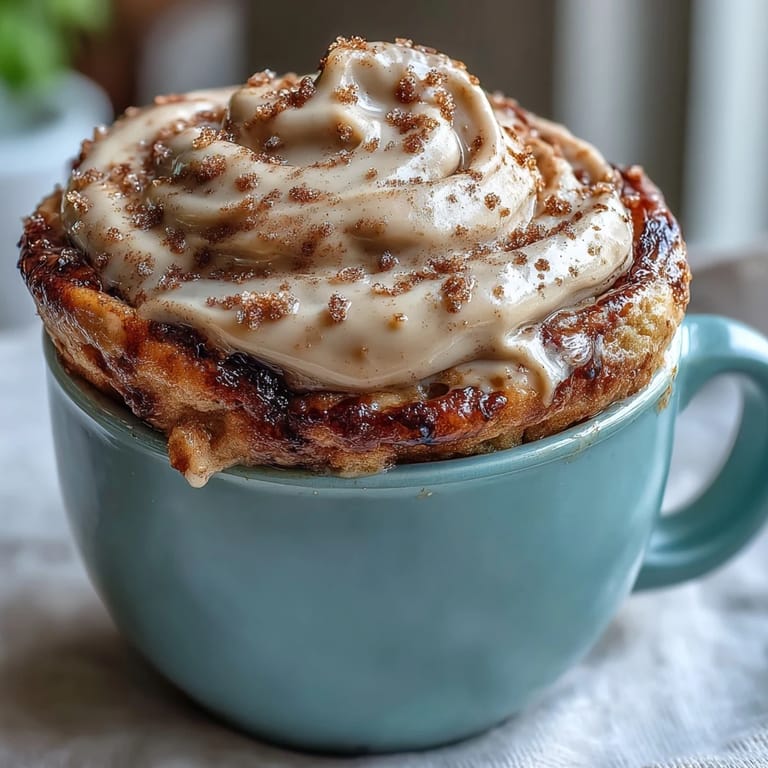
 There's something oddly magical about standing in front of the microwave at 6 AM, waiting for a mug cake to puff up, knowing you're about to eat dessert for breakfast without guilt. My mornings shifted the day I realized protein powder didn't have to taste like regret—it could taste like a cinnamon roll, the kind that used to take an hour to proof and bake. This mug cake happened because I was impatient, hungry, and tired of choosing between what I wanted and what my body actually needed. The swirl of cinnamon sugar and tangy cream cheese topping turned a five-minute experiment into something I now crave on days when time is short but appetite is enormous.
I fed this to my mom one morning when she was skeptical about fitness food, and she actually asked for the recipe instead of making a joke. She's not someone who gets excited about protein anything, which made watching her scrape the cream cheese off the sides of the mug feel like a genuine win. It became our weird thing—she'd text me photos of her mug cakes with different toppings, and suddenly we had something we could cook together even when we lived apart.
Ingredients
- Vanilla protein powder (1/4 cup): This is your foundation, and picking one that actually tastes good matters more than you'd think—some brands taste chalky no matter what you mix them with, so taste-test first.
- Oat flour (2 tbsp): Creates tenderness and helps mimic real cake texture; it's the secret that stops this from tasting like a dense protein brick.
- Baking powder (1/4 tsp): This tiny amount lifts everything in the microwave, transforming dense batter into actual cake with structure.
- Ground cinnamon (1/4 tsp in batter plus 1/2 tsp in swirl): Don't skip the double dose—cinnamon is what makes this feel like a dessert you're allowed to have for breakfast.
- Sweetener (1 tbsp granulated, 1/2 tbsp powdered): Erythritol works beautifully here without the bitter aftertaste you get in coffee; if using regular sugar, the cake will be slightly denser but absolutely delicious.
- Salt (pinch): Balances sweetness and makes every other flavor pop in ways you don't expect until you leave it out once.
- Milk (3 tbsp): Use whatever you have—dairy, almond, oat—but the ratio stays the same, and it's what binds everything into smooth batter.
- Egg white (1 large): Keeps the protein count high while adding moisture that whole eggs sometimes overshadow.
- Vanilla extract (1/2 tsp in batter plus 1/4 tsp in topping): Real vanilla makes the difference between tasting homemade and tasting like a supplement shake.
- Melted butter or coconut oil (1/2 tbsp): Your choice changes the flavor slightly—butter tastes richer, coconut oil gives a subtle nutty note.
- Brown sugar or coconut sugar (1 tbsp in swirl): Brown sugar is traditional and melts beautifully into the batter; coconut sugar is slightly less sweet and adds complexity.
- Light cream cheese (1 1/2 tbsp): Room temperature is crucial—cold cream cheese gets lumpy and won't spread smoothly over the warm cake.
- Powdered sweetener (1/2 tbsp): Dissolves into the topping without grittiness, and blends into the cream cheese like an actual frosting would.
Tired of Takeout? 🥡
Get 10 meals you can make faster than delivery arrives. Seriously.
One email. No spam. Unsubscribe anytime.
Instructions
- Combine your dry base:
- Grab a microwave-safe mug that's at least 10 ounces and mix the protein powder, oat flour, baking powder, cinnamon, sweetener, and salt right in the bottom—this prevents lumps from forming later when you add wet ingredients. A fork works fine here; you're just breaking up any clumps.
- Stir in the wet ingredients:
- Pour in the milk, egg white, and vanilla extract and stir until the batter looks smooth and pourable, like pancake batter but slightly thicker. If you see dry specks, keep stirring—those are the culprits that make mug cakes grainy.
- Make your cinnamon swirl:
- In a tiny bowl, mix melted butter, brown sugar, and cinnamon until it looks like wet sand—this should take about 30 seconds. The mixture will smell immediately like a bakery, which is your signal you're on the right track.
- Swirl it in:
- Drop small spoonfuls of the cinnamon mixture randomly across the top of your batter, then grab a toothpick or knife and drag it through in gentle swoops to distribute the swirl without completely homogenizing it. The goal is pockets of cinnamon sugar, not uniformity.
- Microwave with precision:
- Cook on high for 60 to 90 seconds—start at 60 if this is your first time, because the center should still look slightly moist when you pull it out, not completely set. It keeps cooking as it cools, and overcooking turns it into a dense hockey puck.
- Prepare the cream cheese topping while it rests:
- Let the cake cool for about one minute, then beat together the softened cream cheese, milk, powdered sweetener, and vanilla until it's light and spreadable, like actual frosting. This takes maybe a minute and transforms the whole experience from snack to treat.
- Top and eat immediately:
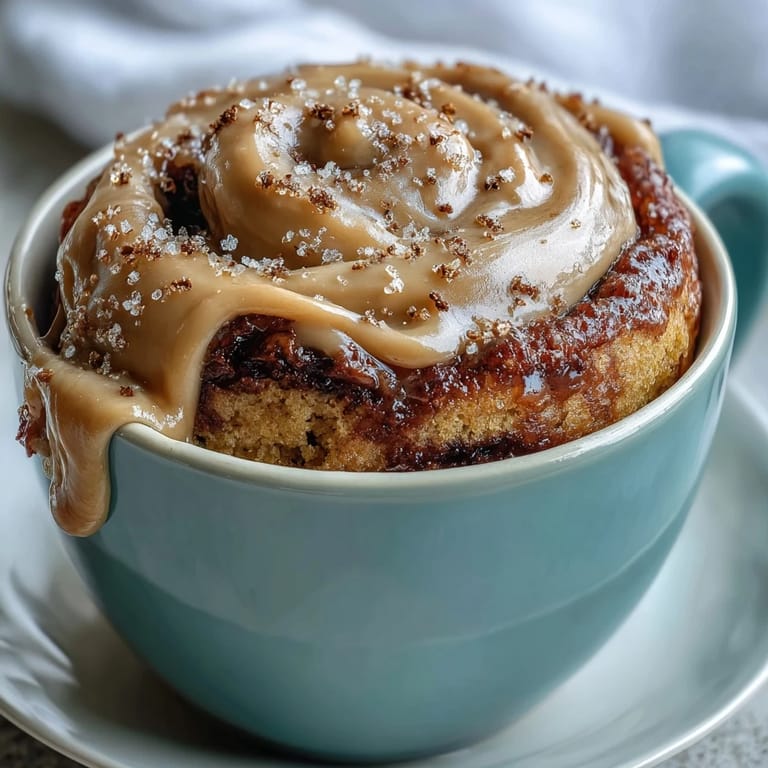
- Spread the cream cheese topping over the still-warm mug cake and eat it right away—the warmth softens the topping into something almost molten. The contrast between warm cake and cool, tangy topping is the whole point.
 Save to Pinterest
 The moment I realized this wasn't just a practical hack happened when I made it for someone visiting who thought they were past the age of enjoying mug cakes. She tasted the cream cheese topping and actually closed her eyes—not because it was health food that happened to taste good, but because it genuinely tasted good, period. That's when I understood this recipe wasn't about shortcuts or making protein palatable; it was about proving that convenience and indulgence don't have to live in different universes.
The Science of Why This Works
Microwave cakes seem like they shouldn't work, but the high heat actually denatures the protein powder in a way that creates structure instead of chewiness, which is the opposite of what happens in a regular oven. The egg white contributes both moisture and lift without the heaviness of a whole egg, and the oat flour provides just enough fiber and texture to fool your mouth into thinking you're eating something more indulgent than the ingredients suggest. The baking powder does serious work in the microwave because the intense, fast heat traps steam, which is what gives you actual cake rise in 90 seconds instead of a dense disc.
Customizing Without Losing Your Mind
The beauty of this recipe is that the base is stable enough to play with while staying dependable. Swapping protein powder flavors changes everything—chocolate protein makes this less cinnamon roll and more chocolate cake with a swirl, vanilla stays classic, and birthday cake protein turns it into something almost absurdly indulgent. I've also experimented with the flour; almond flour works but makes it slightly more crumbly, while coconut flour absorbs more liquid so you'd need to add a splash more milk. The topping is where I get creative—Greek yogurt instead of cream cheese adds tanginess, and a thin drizzle of maple syrup or a sprinkle of crushed pecans takes it from good to the kind of thing you think about until you make it again.
Making This Fit Your Day
This cake lives in that weird space between breakfast and dessert, which is exactly where I live on most mornings. It's substantial enough to function as part of breakfast, sweet enough to satisfy a dessert craving, and quick enough that making it doesn't derail your actual plans. I've made this before runs, after frustrating work calls, as a midnight snack when I was too tired to cook anything real, and yes, for actual breakfast. The protein keeps you full longer than cake usually does, but the sweetness and texture hit the same reward centers that junk food hits, so your brain doesn't feel like you're making a compromise.
- Prep everything the night before in separate containers so morning assembly takes literally 90 seconds.
- Make a double batch by cooking two mugs back-to-back if you want leftovers, though it's honestly best eaten fresh.
- Keep your protein powder and oat flour near the microwave so this stays a true five-minute endeavor.
 Save to Pinterest
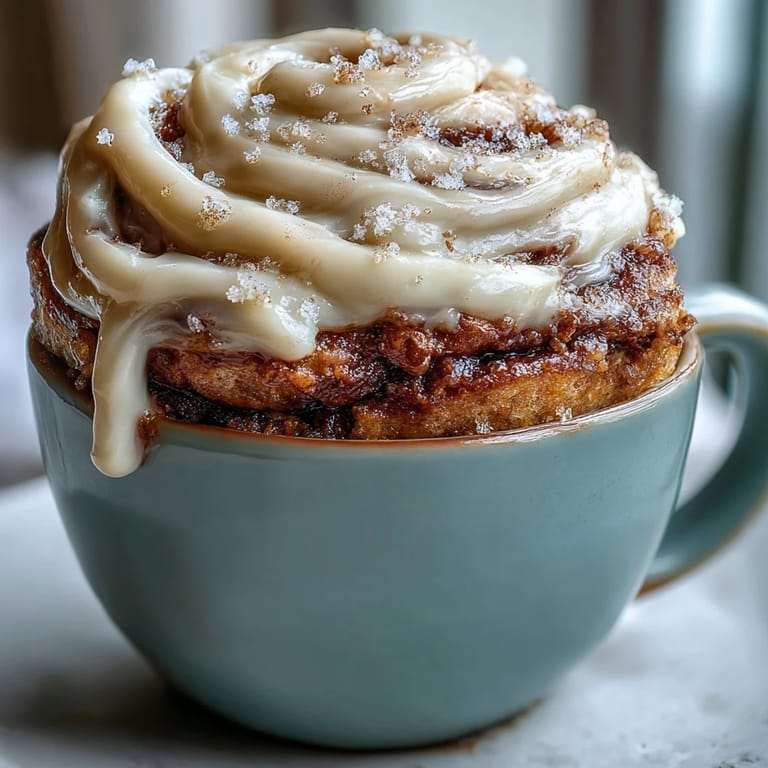
 This mug cake taught me that the best recipes aren't the ones that taste like they're good for you—they're the ones that are good for you and happen to taste like something you actually want to eat. After the hundredth time making this, it stopped being a hack and became a genuine comfort food, the kind of thing you crave when you want something that feels like a treat but doesn't require an apology afterward.
FAQs About This Recipe
- → Can I make this gluten-free?
Yes, simply swap the oat flour for almond flour and ensure your protein powder is certified gluten-free. The texture remains moist and fluffy with this substitution.
- → Why did my mug cake turn out dry?
Overcooking is the most common culprit. Microwave times vary, so start checking at 60 seconds. The center should look set but still moist—carryover cooking will finish it as it rests.
- → Can I use different protein powder flavors?
Absolutely. Vanilla works best for the classic cinnamon roll taste, but chocolate or unflavored varieties also work. Adjust the sweetener amount if your powder is already sweetened.
- → Can I bake this instead of microwaving?
You can bake at 350°F (175°C) for 12-15 minutes in a ramekin or oven-safe dish. The texture will be slightly more cake-like than the microwave version.
- → How long does this keep?
Best enjoyed immediately while warm. If storing, refrigerate for up to 2 days and reheat for 20-30 seconds. The frosting may need stirring before serving.
- → Can I double this for two servings?
Multiply ingredients and divide between two mugs. Microwave separately for even cooking, or use a larger dish and increase cooking time by 30-60 seconds.