 Save to Pinterest
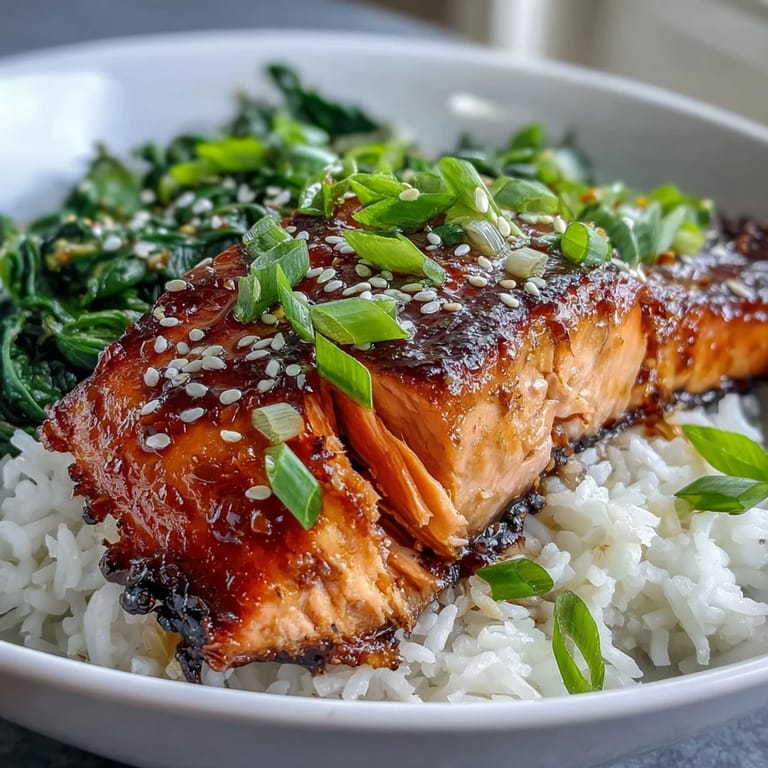
 One evening, I stood in my kitchen holding a gorgeous salmon fillet, wondering how to make something that felt both elegant and effortless. That's when the miso glaze came together—a whisked combination of umami-rich paste, bright mirin, and honeyed sweetness that changed everything about how I approached weeknight dinners. The glaze caramelizes under the broiler into something almost glossy, catching the light like it's been kissed by fire. Served over fluffy jasmine rice and wilted spinach, it became the bowl I couldn't stop making.
I made this for my partner on a random Tuesday when neither of us felt like ordering takeout, and something shifted in how we approached cooking together. The kitchen filled with the smell of ginger and garlic hitting hot oil, then the salmon's aroma as it broiled, and suddenly we were both hovering over the bowls like they held secrets. It became our go-to for those moments when we wanted to feel taken care of without the restaurant markup or the wait.
Ingredients
- Salmon fillets (4, about 150g each, skinless): Look for fillets that feel firm and smell oceanic, not fishy—this matters more than you'd think for the final taste.
- White miso paste (3 tbsp): Use white or sweet miso specifically; the darker varieties turn bitter under heat and will throw off your glaze balance.
- Mirin (2 tbsp): This sweet rice wine is what gives the glaze its shine, so don't skip it or substitute with sugar alone.
- Soy sauce (2 tbsp, plus 1 tsp for spinach): Regular soy sauce works fine, but tamari is your friend if anyone at the table avoids gluten.
- Honey (1 tbsp): Adds depth to the glaze and helps it caramelize; use whatever you have on hand.
- Rice vinegar (1 tbsp): The acidity cuts through the richness and keeps the glaze from tasting one-note.
- Toasted sesame oil (1 tsp): A little goes a long way—this is concentrated flavor, not cooking oil.
- Fresh ginger (1 tsp grated, plus 1 tsp for spinach): Freshly grated tastes noticeably different from jarred; it's worth the small effort.
- Garlic (2 cloves minced total): One for the glaze, one for the spinach—they work in different ways in each component.
- Jasmine rice (1 1/2 cups): The fragrance matters here; it's what makes this feel special instead of ordinary.
- Water (3 cups for rice): Use cold water and rinse the rice first to remove excess starch.
- Fresh spinach (300g): Baby spinach wilts quickly and evenly, which is exactly what you want.
- Vegetable oil (1 tbsp for spinach): Keep the heat moderate so the oil doesn't smoke and overpower the delicate greens.
- Green onions (2, thinly sliced): The fresh bite at the end brings everything into focus.
- Toasted sesame seeds (1 tbsp): Toast your own if you can—the difference is remarkable.
- Nori strips and lime wedges (optional): These elevate the bowl visually and add textural contrast; don't skip unless you have a strong reason.
Tired of Takeout? 🥡
Get 10 meals you can make faster than delivery arrives. Seriously.
One email. No spam. Unsubscribe anytime.
Instructions
- Whisk the glaze until it's silky:
- In a small bowl, combine miso, mirin, soy sauce, honey, rice vinegar, sesame oil, ginger, and garlic, stirring until completely smooth with no white miso streaks remaining. This takes about a minute of patient whisking and makes all the difference in how evenly it coats the salmon.
- Coat the salmon and let it marinate:
- Place fillets in a shallow dish and pour the glaze over, using a brush or spoon to coat every surface generously. Slide it into the fridge for 15 to 30 minutes—this gives the flavors time to sink in without drying out the fish.
- Get your rice started:
- Rinse the jasmine rice under cold running water, stirring gently until the water runs mostly clear. Combine it in a saucepan with 3 cups water and a pinch of salt, bringing it to a boil, then immediately drop the heat to low, cover it, and let it steam undisturbed for 12 to 15 minutes.
- Wilt the spinach with aromatics:
- Heat oil in a large skillet over medium heat and add your ginger and minced garlic, waiting about 30 seconds until the kitchen smells incredible. Pile in the spinach with a pinch of salt and toss constantly for just 1 to 2 minutes until it's tender and darkened, then finish with a teaspoon of soy sauce and set it aside.
- Broil the salmon until it caramelizes:
- Preheat your broiler to 220°C (425°F) and line a baking sheet with foil, lightly oiling it so the fish won't stick. Arrange your marinated fillets and slide them under the broiler for 8 to 10 minutes, watching as the glaze bubbles and browns at the edges—this is when the magic happens.
- Build each bowl with intention:
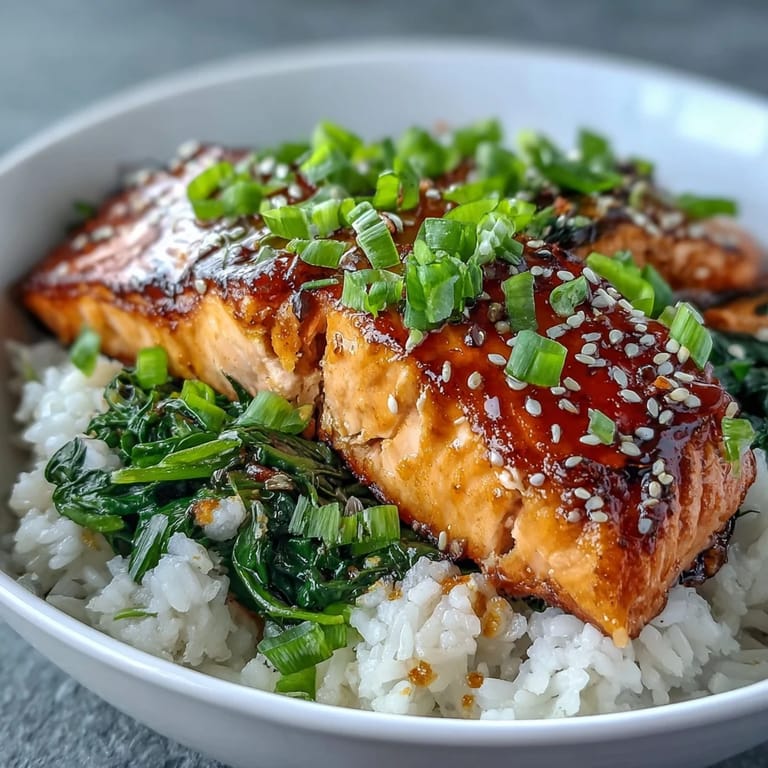
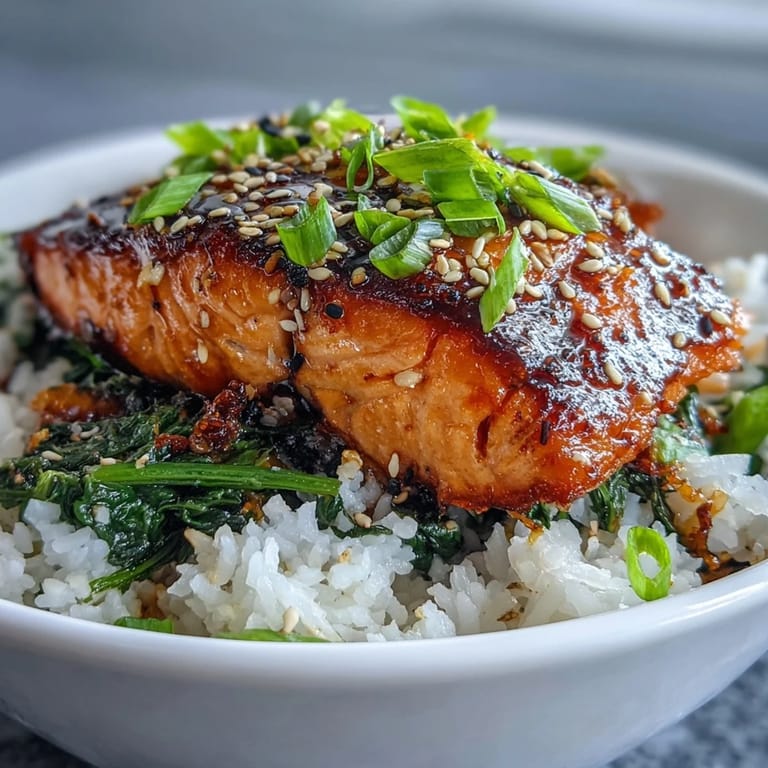
- Divide the rice among four bowls, pressing it down gently to create a bed. Top each with a pile of wilted spinach, then crown it with a glossy salmon fillet, letting the juices mingle with the rice below. Finish with a scatter of green onions, sesame seeds, nori strips if you're using them, and a lime wedge for squeezing.
 Save to Pinterest
 There's a moment when you're assembling these bowls where it hits you that this is real food you made yourself—something that tastes like it came from a careful kitchen, not rushed or secondhand. My friends used to photograph their takeout; now they photograph what I've made them, and I'll admit that feels better than any review ever could.
Timing and Prep Strategy
The beauty of this recipe is that most of the work happens in parallel. While the salmon marinates, you start your rice; while the rice simmers, you prep and sauté the spinach. By the time everything is ready to cook, you're essentially just broiling the fish for 10 minutes and assembling. I learned to prep all my garnishes—slicing the green onions, toasting the sesame seeds, cutting the nori—before I turn on any heat, which makes the final moments feel calm instead of chaotic.
Flavor Balancing and Swaps
The glaze works because it hits sweet, salty, sour, and savory all at once, with sesame oil adding that crucial nuttiness. If you find your glaze tastes too strong, thin it slightly with a teaspoon of water before applying it. For variations, brown rice offers a nuttier base, quinoa works beautifully if you want more protein, and adding a sliced avocado just before serving changes the texture in a way that feels luxurious without complicating the dish.
Serving and Storage
This bowl tastes best eaten immediately while the salmon is still warm and the rice retains its steam, but I've successfully made the components ahead and assembled them cold as a lunch the next day. The salmon actually deepens in flavor after sitting, and the cold version feels lighter, almost like a deconstructed poke bowl. If you have leftovers, store everything separately in airtight containers in the fridge for up to three days.
- Fresh lime juice squeezed at the table lifts the entire dish and makes people taste it differently.
- A cold sake or crisp white wine paired with this transforms dinner into something that feels intentional.
- Don't be shy with the sesame seeds—they're what makes people ask why this tastes so good.
 Save to Pinterest
 This bowl became my answer to the question of what to make when you want something that feels thoughtful without being stressful. It's the kind of food that reminds you why cooking for yourself matters.
FAQs About This Recipe
- → What does miso glaze taste like?
Miso glaze delivers a savory-sweet flavor profile with deep umami notes. The white miso provides fermented richness, while honey and mirin add sweetness. Soy sauce contributes saltiness, and ginger brings subtle warmth. The result is a balanced, complex coating that caramelizes beautifully when cooked.
- → Can I use frozen salmon fillets?
Yes, frozen salmon works well for this bowl. Thaw completely in the refrigerator overnight before marinating. Pat the fillets dry with paper towels to remove excess moisture, which helps the glaze adhere properly and promotes better caramelization during cooking.
- → How long should I marinate the salmon?
Marinate for 15-30 minutes for optimal flavor absorption. Longer marinating up to 2 hours enhances the miso flavor, but avoid exceeding 4 hours as the high salt content can start to break down the salmon's texture. The minimum 15 minutes still delivers delicious results.
- → What can I substitute for jasmine rice?
Short-grain sushi rice creates a stickier texture traditional in Japanese cuisine. Brown rice adds nutty flavor and extra fiber but requires longer cooking. Quinoa offers a protein-packed alternative with similar cooking time to white rice. Cauliflower rice works for low-carb versions.
- → Is this bowl gluten-free?
The traditional version contains gluten from soy sauce and some miso pastes. To make it gluten-free, use tamari instead of soy sauce and verify your miso paste is certified gluten-free. Most white miso pastes are naturally gluten-free, but always check labels to be certain.
- → How do I know when the salmon is done?
The salmon is finished when it flakes easily with a fork and the internal temperature reaches 145°F (63°C). The glaze should appear caramelized and slightly sticky. Visual cues include the salmon turning opaque throughout and the flesh beginning to separate into moist sections when gently pressed.