 Save to Pinterest
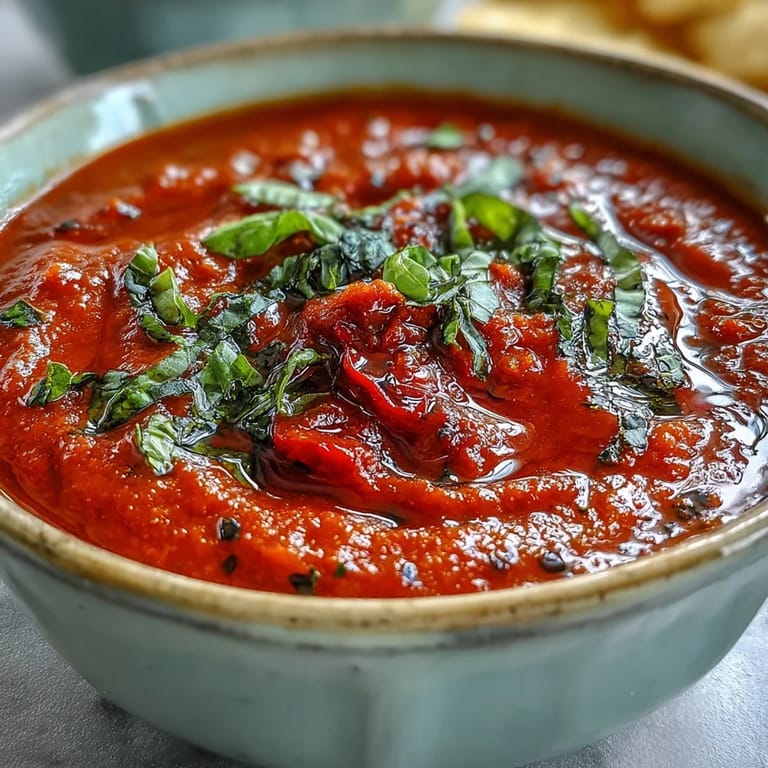
 The smell of blistered tomatoes always reminds me of my neighbors overflowing garden. One August afternoon, they handed me a bushel so heavy I nearly dropped it on my porch. I spent that humid evening hovering over the oven, watching the skins char and pop while listening to the cicadas outside. This soup was not planned, but the way the kitchen filled with that sweet concentrated aroma made it feel like a celebration of summer.
My kitchen counter was a sea of red juice and discarded stems when I first tried this method. I realized then that the messy process is actually half the fun of a homemade meal. The steam rising from the blender fogged up my glasses, making me laugh as I searched blindly for the ladle. It is a dish that rewards your patience with the most vibrant color you can imagine.
Ingredients
- Ripe Tomatoes: Roma or vine ripened ones work best because they hold their structure until they absolutely melt in the heat.
- Yellow Onion: These get incredibly sweet and jammy when roasted, providing a base that needs very little extra help.
- Garlic Cloves: Do not be afraid of the quantity since roasting takes away the sharp bite and leaves behind pure roasted gold.
- Fresh Basil: Stir this in at the very end so the heat of the soup releases the oils without making the leaves bitter.
- Vegetable Broth: Using a low sodium version allows you to control the saltiness precisely as the flavors concentrate.
- Unsalted Butter: This is my favorite way to get that velvet mouthfeel that makes you feel like you are at a fancy bistro.
Tired of Takeout? 🥡
Get 10 meals you can make faster than delivery arrives. Seriously.
One email. No spam. Unsubscribe anytime.
Instructions
- Heat and Prep:
- Get your oven screaming hot at 220C and line your pan to save yourself from a scrubbing nightmare later. This simple prep makes the whole process feel much lighter.
- Roast the Goods:
- Toss those halved tomatoes and onions with oil until they look glossy and beautiful before sliding them into the heat. Make sure they are spread out so they roast rather than steam.
- Concentrate Flavors:
- Let them bake until the edges are dark and the tomatoes have slumped into sweet puddles of juice. The charred bits are where all the smoky magic happens.
- Simmer Slowly:
- Move everything into a pot with the broth and let those roasted juices mingle with the fresh basil and butter. A gentle simmer for a few minutes helps the flavors marry together.
- The Great Blend:
- Use your immersion blender to turn those chunky vegetables into a silky stream of vibrant orange liquid. Be careful with the hot splashes as you work through the pot.
- The Final Polish:
- Pass the soup through a sieve if you want it extra smooth, then check if it needs one last pinch of salt. Serve it hot with your favorite toppings.
 Save to Pinterest
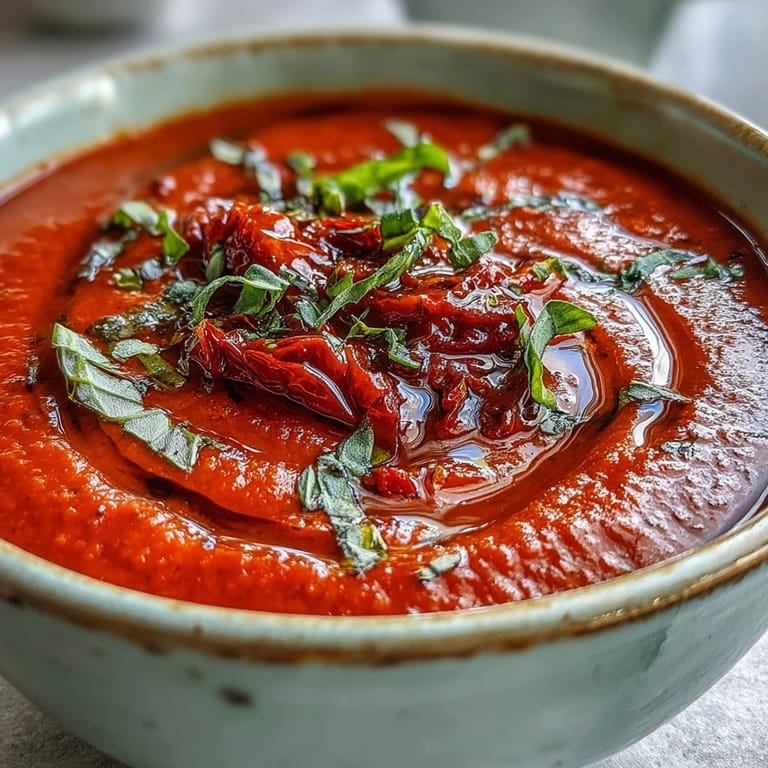
 Last winter, I served this in mismatched mugs to a group of friends who showed up unannounced and cold. We sat on the floor, dipping crusty bread into the thick soup while the windows frosted over. It was a simple moment that reminded me why I love to cook for others.
The Secret To Texture
If you prefer a rustic feel, leave a few chunks of roasted onion in the pot instead of blending it to total liquid. I found that the occasional bite of soft onion makes the meal feel more substantial and homey. It adds a wonderful layer of complexity to every spoonful.
Choosing The Right Wine
A crisp white wine helps cut through the richness of the butter and the intensity of the roasted tomatoes. I usually pour a glass of Sauvignon Blanc for myself while the tomatoes are in the oven. The acidity of the wine balances the sweetness of the roasted vegetables perfectly.
Making It Your Own
This recipe is a canvas that welcomes whatever herbs you have leftover in your crisper drawer. You can swap the basil for thyme or even add a splash of balsamic vinegar for a tangy kick. Experimenting with different garnishes can change the mood of the entire dish.
- Add a pinch of red pepper flakes if you like a slow building heat.
- Use a splash of heavy cream at the very end for a gorgeous swirl of color.
- Always toast your bread with a little olive oil to give the soup some crunch.
 Save to Pinterest
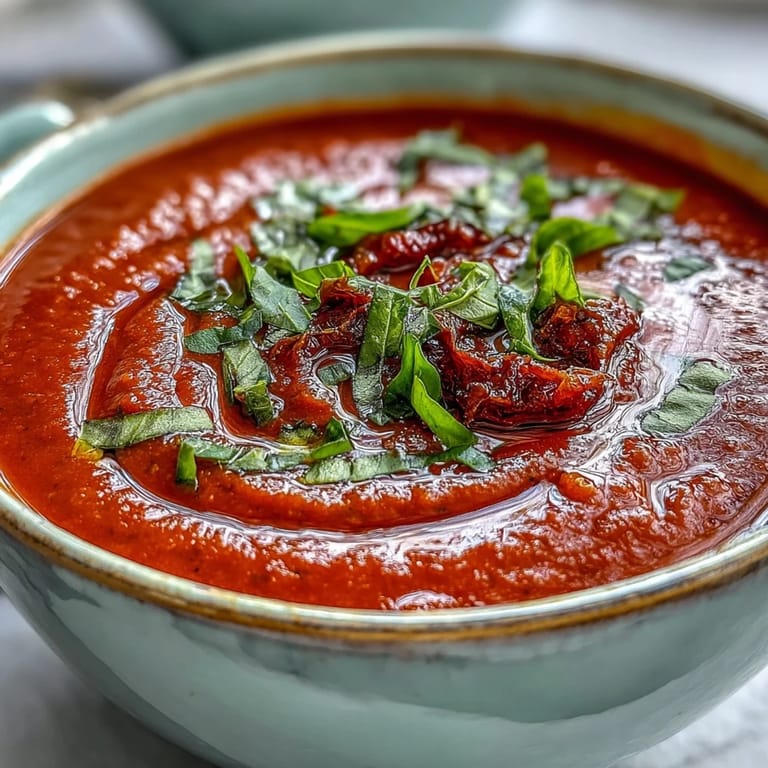
 This soup is more than a meal, it is a warm hug in a bowl that makes any day feel a bit brighter. I hope you enjoy the process of roasting and blending as much as the very first sip.
FAQs About This Recipe
- → Can I make this soup ahead of time?
Absolutely. This soup actually develops deeper flavors when made ahead. Store in an airtight container in the refrigerator for up to 4 days. Reheat gently over medium-low heat, stirring occasionally to prevent scorching.
- → What type of tomatoes work best?
Roma, plum, or vine-ripened tomatoes are ideal because they're meaty and less watery. However, any ripe tomatoes will work beautifully. During winter months, quality canned tomatoes can be substituted, though fresh roasted tomatoes offer superior flavor.
- → How can I make this soup vegan?
Simply omit the butter and cream garnish, or substitute with your favorite plant-based alternatives. Coconut cream or cashew cream work wonderfully for richness, while olive oil provides the necessary fat for flavor balance.
- → Why roast the vegetables first?
Roasting concentrates the natural sugars in tomatoes and onions, creating caramelized notes that can't be achieved through simmering alone. This extra step transforms ordinary ingredients into something extraordinary, giving the soup its signature depth and restaurant-quality taste.
- → Can I freeze this soup?
Yes, this freezes exceptionally well. Cool completely before transferring to freezer-safe containers, leaving space for expansion. Freeze for up to 3 months. Thaw overnight in the refrigerator and reheat gently. Note that cream should be added after reheating, not before freezing.
- → What's the purpose of straining the soup?
Straining through a fine sieve removes any remaining pulp or seeds, creating an exceptionally smooth, silky texture reminiscent of fine dining establishments. However, leaving it slightly chunky or rustic is equally delicious and adds lovely texture.